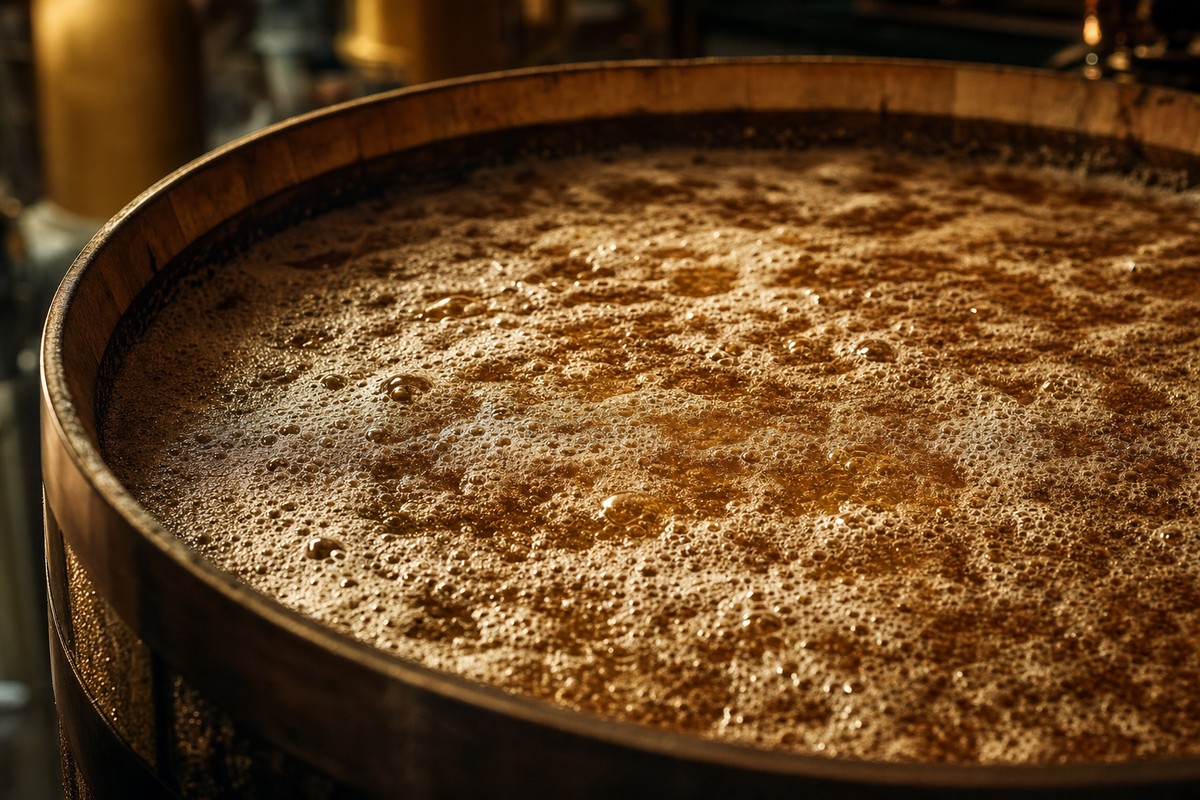
Distillers love telling a good yeast-preservation story — a jug carried home through Prohibition, a strain “recovered” from an antique vessel, a culture handed down across generations. Some version of this story shows up at more than one American distillery. Before repeating one as fact, it’s worth knowing exactly what claim is actually being made.
Four Different Claims, One Word
”Original yeast” usually means one of these.
- Strain — a specific, genetically distinct population of yeast cells
- Culture — a living batch descended from a strain, kept alive by regular feeding
- Propagation — growing more yeast from an existing culture, generation after generation, indefinitely
- Genetic continuity — the claim that a modern culture's DNA still matches its claimed historical ancestor
A dormant sample surviving decades in a jar is real, documented microbiology. A culture staying genetically unchanged after years of active propagation is a much bigger, much harder claim.
What's Actually Plausible
Dormancy is real. Perfect continuity is the hard part.
Dried yeast cells can survive for a genuinely long time in a dormant, inactive state, protected by a hard shell they form when starved of food and moisture — labs have revived viable cultures from samples stored for decades. That part of a “century-old yeast” story is credible on its face.
What’s much harder to verify is everything that happens after revival. Once a surviving population is regrown into a working culture, it gets propagated — split, refed, regrown — indefinitely, batch after batch, often for years before it’s used commercially at any real scale. Every one of those generations is an opportunity for genetic drift or mutation. A culture that’s been kept alive and growing for a long time is not automatically the same organism, in every meaningful sense, as whatever was originally dormant.
See It in Practice
Two versions of the same story, at two different companies.
Issue No. 010 examines this exact question at two distilleries with strikingly similar yeast-preservation stories — Jim Beam’s own account of surviving Prohibition, and Limestone Branch’s account of cloning yeast from a jug that belonged to Minor Case Beam for Yellowstone Family Recipe. Both are worth knowing. Neither should be repeated as a settled scientific fact.