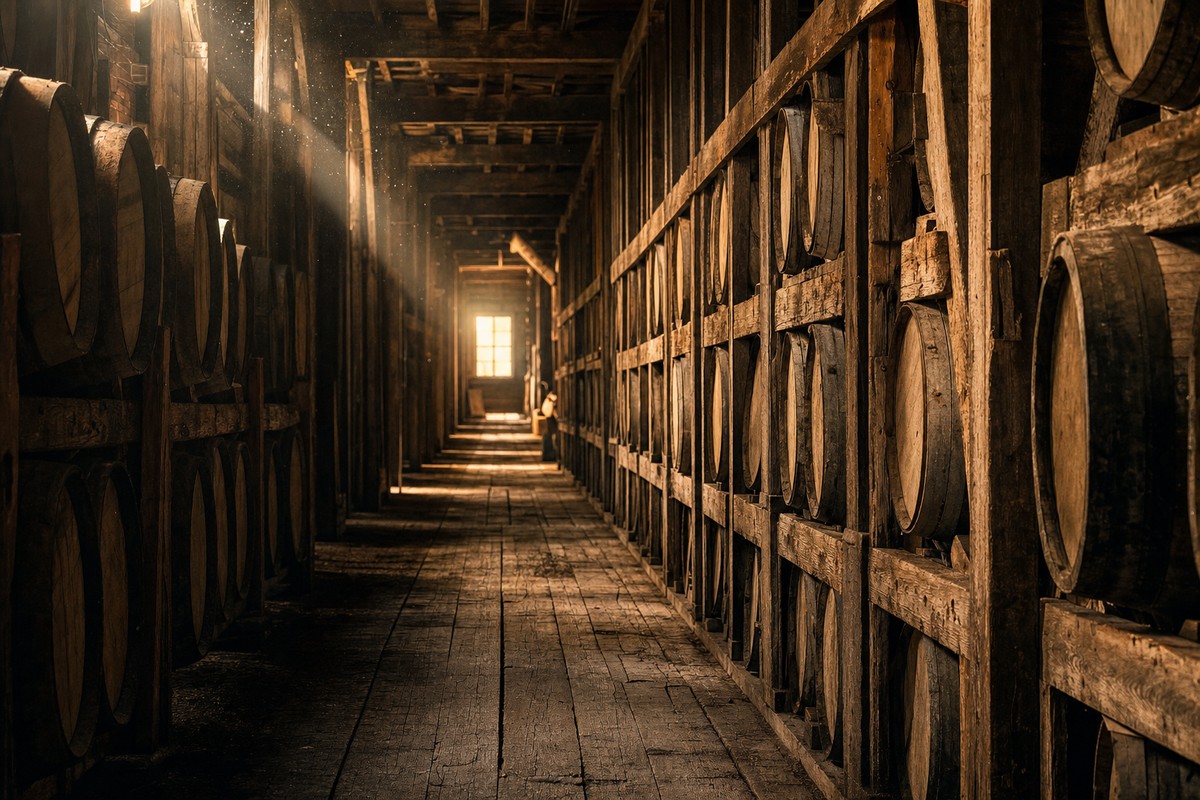
Bourbon barrels are made of oak, and oak is porous. Every year a barrel spends aging in a rickhouse, a percentage of the liquid inside evaporates straight through the wood. Distillers call this loss the Angel’s Share — the portion, as the old saying goes, that the angels take for themselves.
The Deeper Lesson
How much bourbon actually disappears.
In Kentucky’s climate, a barrel typically loses 2–4% of its volume per year to evaporation. Over a 10-year aging period, that can mean a barrel loses close to a third of what it started with. Hotter, higher floors of a warehouse — the rickhouse, in distillery language — lose more, faster; cooler lower floors lose less, and airflow and construction (traditional wood-frame rickhouses behave differently than modern metal-clad ones) add another layer on top of floor alone. That’s why warehouse position, not just the calendar, shows up so often in tasting notes and allocated releases.
Common Misconception
Age on the label is a floor, not the whole story.
A barrel from a hot top floor at year nine might taste more like a “12-year” than an actual 12-year barrel from a cool bottom floor — which is exactly why two bourbons with the same age statement can taste meaningfully different, and why warehouse position is its own flavor variable, distinct from age itself.