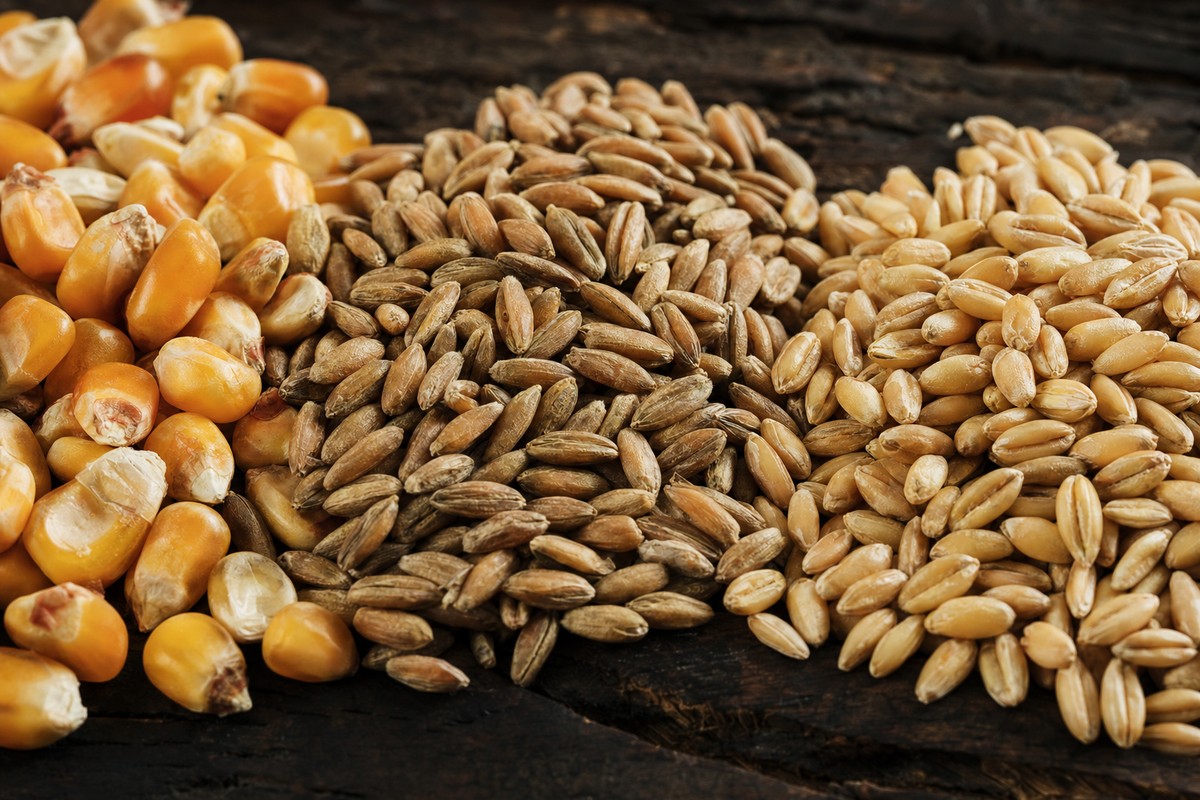
Every bourbon starts as a recipe of grains, and that recipe is called the mash bill. By law, the mash bill for bourbon must be at least 51% corn. What fills out the rest of the recipe — rye, wheat, and malted barley — is where distilleries make their signature flavor decisions.
The Deeper Lesson
Three families, one starting grain.
Traditional (high-corn, low-rye) mash bills typically run 70–80% corn with a modest amount of rye and malted barley. These tend to produce a sweeter, caramel-forward bourbon.
High-rye mash bills swap in a larger percentage of rye — often 15–35% — in place of some corn. Rye brings spice, pepper, and a drier finish.
Wheated mash bills replace the rye entirely with wheat. Without rye’s spice, wheated bourbons tend to taste softer, rounder, and more approachable, which is part of why bottles like Pappy Van Winkle built such a following.
Ledger Example
Four Roses proves the point twice.
Four Roses runs exactly two mash bills — a 35%-rye recipe and a 20%-rye recipe — through five different proprietary yeast strains, producing ten distinct bourbon recipes from just two grain bills. Hold the mash bill constant and the whiskeys still taste noticeably different from each other, which is the clearest real-world demonstration on the market that grain is one variable, not the whole story.
Corn percentage alone won’t tell you everything — barrel char, proof, and warehouse location all matter too — but the mash bill is the first and most useful data point.
If you know you like spicier, cocktail-friendly bourbons, look for a high-rye mash bill on the label or spec sheet. If you prefer something soft and sippable neat, a wheated bourbon is usually the safer bet.