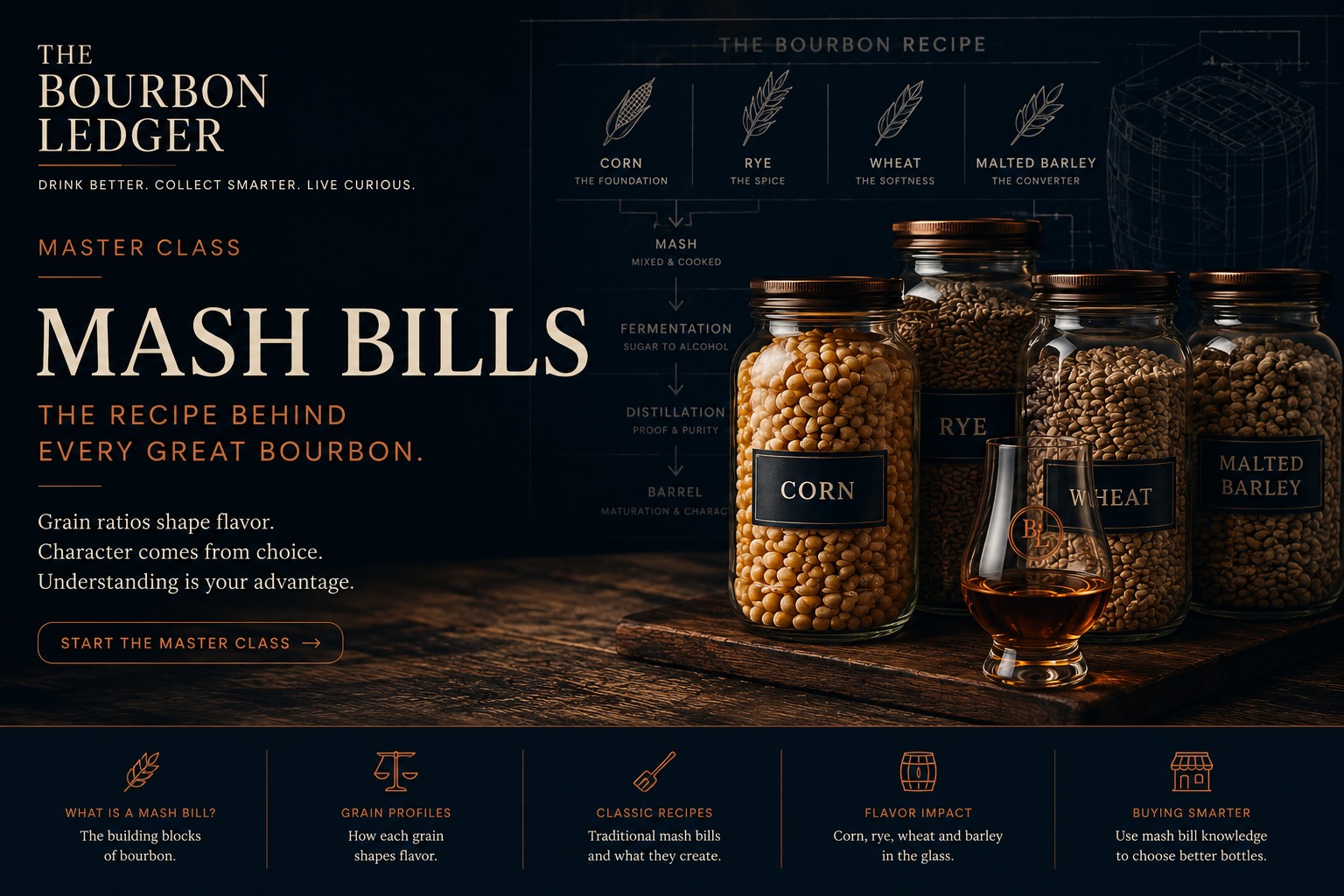
A mash bill is the grain recipe used to make whiskey — the ratio of corn, rye or wheat, and malted barley that goes into the fermenter before a single drop is distilled. It’s one of the first specs a curious drinker learns to look for, and for good reason: it’s a genuine, reliable clue to how a bourbon will taste.
It’s also, on its own, an incomplete answer. Two bourbons can share close to the same mash bill and taste meaningfully different. A single distillery can build several distinct flavor identities from grain recipes that differ by only a few percentage points. This Master Class exists to teach you how mash bills actually work — what they reliably tell you, what they don’t, and how to use that information without treating it as a flavor formula it was never built to be.
Bourbon School What Is a Mash Bill? New to the term? Start with the two-minute primer before this deep dive.The Legal Floor
Bourbon’s one hard rule: at least 51% corn.
Federal regulation is specific about very little in bourbon, but it’s specific about this: to be labeled bourbon, a whiskey must be distilled from a fermented mash of grain that is at least 51% corn, distilled to no more than 160 proof, entered into new charred oak containers at no more than 125 proof, and reduced to no more than 125 proof if water is added before barreling. There’s no minimum age for bourbon — that requirement only applies to the “straight” designation, which adds a two-year floor.
That 51% is a floor, not a target. In practice, most bourbon mash bills run well above it — commonly somewhere between 60% and 80% corn — because corn is cheap, ferments reliably, and gives a distillery room to still call the whiskey “bourbon” even after building in a meaningful percentage of a second grain.
What fills the other 49% or less is where the recipe stops being a legal requirement and starts being a flavor decision.
If bourbon has to be at least 51% corn, what can a distiller actually do with the other 49%?
That’s the real design question behind every mash bill on the shelf, and it’s the one this Master Class is built around. Most producers answer it the traditional way, with rye or wheat and a little malted barley. A smaller number answer it with grains most bourbon drinkers have never tasted on their own — which is exactly where this Master Class ends up before it’s done. First, the traditional answers, done properly.
The Base Grain
What corn actually does.
Corn is the reason bourbon exists as a category distinct from Scotch or rye whiskey, and its main contribution is straightforward: sweetness, body, and a round, grain-forward character that reads as corn syrup, corn husk, or baking-sugar sweetness depending on how it’s handled downstream.
Here’s the shortcut to avoid: more corn does not automatically mean sweeter bourbon. It’s tempting to treat corn percentage as a sweetness dial, but plenty of the sweetness readers associate with bourbon doesn’t come from the corn itself — it comes from caramelization in the charred barrel, from vanillin and other compounds pulled out of the oak, from fermentation esters, and from how much the whiskey is proofed down with water before bottling. A high-corn bourbon aged briefly in a lightly charred barrel can taste leaner and less sweet than a lower-corn bourbon that spent years extracting sugar and vanilla from deeply charred wood. Corn sets a baseline. It doesn’t lock in the outcome.
The Spice Grain
What rye actually does.
Rye is the traditional counterweight to corn’s sweetness: spice, black pepper, mint and other herbal notes, a drier finish, and sometimes a bright, almost fruity lift depending on fermentation and yeast. The more rye in the mash bill, the more that character tends to assert itself, which is why “high-rye” has become a recognized style in its own right rather than just a variation on traditional bourbon.
Low-rye vs. high-rye, with real numbers: Woodford Reserve Kentucky Straight Bourbon runs a traditional, comparatively low-rye recipe — 72% corn, 18% rye, 10% malted barley. Bardstown Bourbon Company’s High Rye roughly doubles the rye share to 36%, at 60% corn and 4% malted barley. Same secondary grain, very different proportion — and the Ledger’s own tasting notes on the Bardstown bottle describe apricot, orange blossom, mint, caramel, nutmeg, cinnamon and vanilla, a reminder that “rye = pepper” is a useful starting guess, not the whole story.
The Soft Grain
What wheat actually does.
Wheat is what a distillery reaches for when it wants rye’s structure without rye’s spice. Swapped in for rye entirely, wheat tends to soften the whiskey: less pepper and heat, more perceived sweetness, and flavors that lean toward bread, pastry, and a rounder, gentler texture on the palate. This is the “wheated bourbon” style that built brands like Weller’s reputation.
That reputation is worth being precise about. Issue No. 005’s Weller Decoder makes the point directly: Weller’s nine-bottle lineup shares a wheated identity, but proof, age, warehouse placement and barrel selection all vary across it — the mash bill tells you the family, not the specific bottle’s character, and Buffalo Trace doesn’t publish an exact wheat percentage for the line. Where we do have exact numbers is Bardstown Bourbon Company, which distinguishes a standard wheated recipe from a high-wheat one: Wheated Bottled-in-Bond runs 68% corn, 20% wheat, 12% malted barley, while High Wheat pushes to 53% corn, 39% wheat, 8% malted barley — corn sitting only two points above the legal floor. Willett Pot Still Reserve offers a third data point at 65% corn, 20% wheat, 15% malted barley, wheated but built on a different balance again.
Corn, rye and wheat are the traditional answers to the 49% question. Malted barley is present in almost all of them — and it’s usually the most misunderstood line on the whole sheet.
The Overlooked Grain
What malted barley actually does — and it’s more than enzymes.
Most drinkers skim past malted barley on a mash bill sheet because it’s almost always the smallest number — typically somewhere between 4% and 15%. “Malted barley provides enzymes” is the standard one-line explanation, and it’s true as far as it goes. It also undersells what barley is actually doing, because barley plays two separate roles that are worth pulling apart.
The functional role. Barley malt is barley that’s been allowed to germinate and then dried, a process that activates enzymes — mainly alpha- and beta-amylase — capable of breaking starch molecules down into fermentable sugars. Corn, rye and wheat are full of starch that yeast can’t use directly; malted barley’s enzymes convert that starch into sugar during mashing, which is what makes fermentation into alcohol possible in the first place. That’s the traditional reason nearly every bourbon mash bill includes some malted barley, whatever else it contains.
It’s not the only way to get there anymore. High-corn or high-rye grain has comparatively low natural enzyme power of its own, and distilling a mash bill built almost entirely from one of those grains without help would mean a very long, inefficient mash. Commercial enzyme products solve that: they can be engineered to work at whatever temperature and pH a distillery’s process needs, and in some cases deliver more raw conversion power than a barley malt addition would. That’s a meaningfully different toolkit than distillers had a generation ago — a mash bill’s grain choices are no longer constrained by which grains happen to have enough natural enzymes to convert themselves. One regulatory wrinkle worth knowing: commercial enzymes are standard practice in American and Canadian distilling, but they’re banned in Scotch production, which is part of why “what’s actually in the mash” can mean something different depending on which country’s whiskey you’re reading a label from.
The flavor role. Even where enzymes could replace it, most traditional bourbon producers keep malted barley in the recipe anyway, and not only out of habit. Malted barley contributes its own flavor — bready, faintly nutty, sometimes described as biscuit-like — on top of its enzymatic job. Willett Pot Still Reserve’s 15% malted barley is noticeably higher than Bardstown’s 4–12% range, and that’s a deliberate flavor choice layered on top of malt’s original technical purpose, not just a production detail.
Push malt percentage further than any bourbon does and the flavor role can become the entire point rather than a side effect. Outside bourbon’s 51%-corn requirement — in the broader world of American malt whiskey, a different legal category entirely — some producers build mash bills that are mostly or entirely malted barley, and choose how that barley is malted the way a brewer chooses hops. Seattle’s Westland Distillery, for instance, has built part of its house style on blending several specifically roasted malts into a single malt whiskey mash bill, aiming for flavors like dark chocolate, toasted nuts and graham cracker — a barley-forward approach to grain flavor that has nothing to do with enzymes at all. It’s not bourbon, and it isn’t offered here as a bourbon example; it’s the clearest illustration available that malt is a flavor lever with real range, not merely the small number handling starch conversion at the bottom of a bourbon mash bill.
There’s also a flavor distinction inside barley itself, separate from percentage: malted versus unmalted. Unmalted barley shows up in some whiskey traditions (most prominently in Irish pot still whiskey) specifically because it brings something malted barley doesn’t — a heavier, grainier, more cereal-forward texture with brighter, sometimes fruitier or tart notes, distinct from malted barley’s toastier, biscuity register. American bourbon mash bills almost never use meaningful unmalted barley, but the contrast is a useful reminder that “barley” isn’t one flavor any more than “rye” or “wheat” is.
Beyond the Big Four
What happens when a distiller answers the 49% question with a grain you’ve never tasted alone.
Corn, rye, wheat and malted barley cover the overwhelming majority of American whiskey, and for good reason — they’re inexpensive, well understood, and their behavior in the mash and the barrel is thoroughly documented. But nothing in the regulation that sets bourbon’s 51%-corn floor says the remaining 49% has to come from rye or wheat at all. A handful of producers use that freedom to work with grains most drinkers have never tasted as a whiskey on their own: oats and millet chief among them. They’re worth understanding on their own terms, not as a footnote to rye and wheat.
Oats
A grain most distillers avoid, on purpose.
Oats show up in whiskey mash bills for a specific, well-documented reason: they’re associated with a creamy, silky, almost viscous mouthfeel that corn, rye and wheat don’t produce the same way. That texture is largely attributed to beta-glucans, a soluble fiber oats carry in far higher concentration than the other grains bourbon typically uses.
That same beta-glucan content is also the reason oats are difficult to work with. High beta-glucan levels can turn a mash gel-like and gummy as it cools — distillers who’ve worked with high-oat mashes have described the consistency turning thick and hard to pump. Left untreated, that gumminess can slow or stall lautering and transfers, strain milling and pumping equipment, and reduce overall spirit yield. The common production fix is enzymatic: commercial beta-glucanase (sometimes blended with other enzymes) breaks the beta-glucans down enough to keep the mash workable, alongside process adjustments most producers treat as house knowledge rather than public formula.
Distillers who persist with oats generally cite the payoff as real: a distinctive, creamy or slippery texture on the palate that’s hard to get any other way. That’s a genuine, frequently reported production and sensory pattern — but it’s worth stating carefully rather than as a formula. “Oats” is not a flavor guarantee any more than “corn” or “rye” is. How much of that creamy character survives into the bottle still depends on the same downstream chain as everything else in this Master Class: proof, distillation cuts, barrel entry, aging, and blending. Treat oats the way you’d treat any other grain claim — as a documented tendency, not a promise.
Millet
An ancient grain that’s almost never a whiskey grain in America.
Millet is a small-seeded cereal grain, gluten-free and drought-tolerant, that’s a staple in parts of Africa and Asia but has essentially no history as an American whiskey grain. That’s precisely what makes it useful here: it isn’t a variation on the corn/rye/wheat spectrum at all, it’s a genuinely different starting point.
Distillers working with millet describe a clean, toasted-grain character with nutty and gently sweet notes — closer to baked grain and vanilla than to anything corn, rye or wheat typically produce. Because so few American producers work with it, there’s a limited public record to generalize from; what’s documented tends to come directly from the small number of distillers actually making it, which is itself worth noticing. Millet is a useful reminder that “grain flavor” is a much bigger design space than the four grains that dominate the American whiskey shelf — and that a mash bill percentage sheet is really a menu of flavor-design choices, most of which the market has simply chosen not to explore yet.
The Case Study
What happens when the unusual grain stops being a footnote and becomes the point?
Theory about oats and millet is one thing. A distillery that builds its entire identity around answering the 49% question with unconventional grains is another, and it’s worth looking at directly.
KOVAL Distillery opened in Chicago’s Ravenswood neighborhood in 2008, founded by Robert Birnecker and Dr. Sonat Birnecker Hart — commonly cited as the first distillery to open within Chicago’s city limits since Prohibition. Rather than building a single flagship bourbon mash bill, KOVAL took the opposite approach: single-grain whiskeys, each one 100% one grain, including rye, wheat, oat and millet, alongside a four-grain blend that mixes oat, malted barley, rye and wheat.
That single-grain structure is what makes KOVAL genuinely useful for this Master Class, beyond being an interesting bottle. A blended bourbon mash bill always asks you to guess how much of what you’re tasting is the rye versus the wheat versus the barley versus everything that happened after distillation. A 100%-one-grain whiskey removes that guessing for exactly one variable: whatever you taste from the grain itself isn’t diluted by a blend. It’s the closest thing to a controlled experiment a shelf actually offers, which is also exactly why it’s not something The Bourbon Ledger can score the way we score a bourbon: KOVAL’s whiskeys aren’t bourbon, we haven’t reviewed them for the Bottle Guide, and nothing here should be read as a rating. This is a case study in what grain can do, not a review.
There’s a regulatory footnote here too. Federal whiskey categories are explicitly named for corn, rye, wheat and malted barley — there’s no legally defined “oat whiskey” or “millet whiskey” category the way there’s a defined bourbon or rye whiskey. That’s part of why bottles like these are usually labeled simply “whiskey”: the grain itself is genuinely outside what the standards of identity anticipated when they were written.
This isn’t abstract for us. The Ledger visited KOVAL’s Ravenswood distillery during a stretch when its lineup included oat, millet, rye and wheat expressions side by side — a rare chance to taste four single-grain whiskeys from one distillery, one still, and (as close as a working distillery gets) one process, with only the grain changing. That’s the same lesson the Bardstown comparison below makes with a blended bourbon mash bill, taken to its logical extreme: hold everything else as steady as you can, and let the grain speak for itself.
The Centerpiece Case Study
Same distillery, same age, three different bourbons.
The clearest evidence that mash bill matters within bourbon itself — and the clearest limit on how far that evidence goes — comes from a single distillery. Issue No. 003 compared three Bardstown Bourbon Company bourbons that share a distillery, an age statement, and roughly a price bracket, varying mainly the grain recipe:
| Bottle | Mash Bill | Proof | Ledger Quality |
|---|---|---|---|
| High Rye | 60% corn / 36% rye / 4% malt | 96 | 8.0/10 |
| Wheated Bottled-in-Bond | 68% corn / 20% wheat / 12% malt | 100 | 8.4/10 |
| High Wheat | 53% corn / 39% wheat / 8% malt | 106 | 8.8/10 |
That’s a genuinely controlled experiment on the axis that matters most for this lesson: same producer, same six years of age, similar retail price. But — and this is the point the original issue was careful to make — it isn’t a laboratory-clean experiment. Bottle proof also moves across the three (96, 100, 106), and High Wheat enters the barrel at a notably low 108 proof compared to the other two. If High Wheat tastes richer, some of that richness is the 39% wheat, and some of it is simply more proof and a different barrel-entry strategy stacked on top. Mash bill pushed the whiskey in a direction; it didn’t work alone to get it there.
The Field Guide
Mash bill families, from traditional to experimental — as far as the record actually supports.
Here’s a working map of the spectrum, from the most traditional bourbon recipes to whiskey that abandons the traditional grains entirely, built only from mash bills The Bourbon Ledger has verified directly from a distillery, spec sheet, or its own reviewed bottles:
| Family | Verified example | Mash Bill |
|---|---|---|
| Traditional / Low-Rye | Woodford Reserve | 72% corn / 18% rye / 10% malt |
| High-Rye | Bardstown High Rye | 60% corn / 36% rye / 4% malt |
| Wheated | Bardstown Wheated BiB | 68% corn / 20% wheat / 12% malt |
| High-Wheat | Bardstown High Wheat | 53% corn / 39% wheat / 8% malt |
| Higher-Malt | Willett Pot Still Reserve | 65% corn / 20% wheat / 15% malt |
| Alternative Grain (not bourbon) | KOVAL Oat Whiskey | 100% oat |
| Alternative Grain (not bourbon) | KOVAL Thresh & Winnow Millet Whiskey | 100% millet |
One family still belongs on this map and isn’t on it yet: high-corn bourbon, which pushes corn well above the 70–80% traditional range for an even sweeter, more grain-forward baseline. It exists in the market, but The Bourbon Ledger doesn’t yet have a reviewed bottle with a confirmed, published mash bill to verify it — so rather than guess at numbers, we’re leaving that row open until a review earns it. That’s a deliberate gap, not an oversight.
Everything Else In The Chain
Why two whiskeys with the same mash bill can still taste different.
Everything above treats mash bill as if it’s the whole recipe. It isn’t — it’s one input into a long chain of decisions, most of which happen after the grain is already milled. Roughly in the order a barrel experiences them:
Before the still: grain sourcing, quality and even the specific variety or cultivar of a grain (two corn varieties don’t behave identically), how finely the grain is milled, the mineral content of the water, the yeast strain used, and how long and how warm fermentation runs — all shift which flavor compounds show up before distillation even starts.
At the still: pot stills and column stills carry different amounts of congener flavor through into the spirit, and distillers make deliberate cuts — separating the early “heads,” the usable “hearts,” and the late “tails” of a distillation run — that decide how much of the grain’s character makes it into the final spirit versus gets discarded. The proof the distiller chooses to collect spirit at is itself one more decision layered on top of the cut.
Into the barrel: barrel entry proof — the proof at which new spirit goes into the barrel — changes how much water is present during aging, which changes extraction. Michter’s says it enters its whiskey at 103 proof, well under the 125-proof legal ceiling, specifically to change that water-to-alcohol balance during maturation; Issue No. 001 examines that claim, and the limits of taking any producer’s production specification on trust.
In the barrel: the cooperage itself — how the barrel is built, its char level, and whether the wood was toasted before charring — the type and prior seasoning of the oak, where the barrel sits in the warehouse, the climate the warehouse experiences season to season, and simple time all interact with each other. See The Angel’s Share for how evaporation alone concentrates flavor independent of anything the mash bill did.
After the barrel: blending across barrels, the proof the whiskey is bottled at, how much it’s diluted with water to get there, and whether it’s chill-filtered all happen after maturation is finished, and all of them can move the final flavor as much as the original grain recipe did. Issue No. 002 shows the regulatory end of this: Bottled-in-Bond fixes several of these variables by law — one distiller, one season, four-plus years, exactly 100 proof — specifically so a shopper can isolate what’s left to compare.
Reading the Mash Bill
You’re standing in a liquor store looking at a mash bill. What can you actually learn from it?
This is the practical payoff for everything above. A mash bill percentage sheet isn’t decoration — it’s a set of reasonable expectations, if you read it the right way and stop at the right point.
| What you see | What it reasonably suggests |
|---|---|
| ~10% rye | A traditional, corn-forward profile with rye present mainly as background structure, not a headline flavor. |
| 20%+ rye | Rye starts to read clearly as spice and dryness alongside the corn sweetness — a genuine high-rye character. |
| 30%+ rye | Rye becomes a dominant, defining note: pepper, herbal spice, sometimes bright fruit, and a noticeably drier finish. |
| Wheat replacing rye | Softer spice, rounder texture, more bread and pastry character in place of pepper — the 'wheated' signature. |
| Very high wheat (35%+) | Corn near the legal floor and wheat doing most of the work — expect richness, but remember proof and barrel entry are usually elevated too, and share the credit. |
| Unusually high malted barley | More bready, biscuity, faintly nutty malt character layered on top of whatever the primary grain is doing. |
| Oats present | A tendency toward creamier, more viscous mouthfeel — a documented pattern, not a guarantee, and rare enough to signal a producer working outside convention. |
| Millet present | Expect something outside the corn/rye/wheat spectrum entirely — reported as clean, toasted, nutty and gently sweet, with little public track record to generalize from. |
| Any unfamiliar secondary grain | Treat it as a signal the producer is optimizing for something other than the traditional formula — worth investigating the distillery's own account of *why*, not just the percentage. |
The Limit
Now forget half of that table.
Not really — but hold it loosely. Everything in that table is a reasonable starting expectation, not a flavor guarantee, for the same reason the rest of this Master Class exists: grain variety, yeast, fermentation, distillation and cuts, barrel entry proof, cooperage, char and toast, warehouse environment, maturation time, blending, and dilution or bottling proof all shape the whiskey that actually reaches your glass. Two bottles can share a mash bill on paper and land in genuinely different places once all of that happens to them.
Weekend Project
Try this at home: the five-bottle mash bill flight.
The fastest way to internalize any of this is to taste it, not just read it. These five bottles are all ones the Ledger has reviewed directly, they span the families verified above, and none of them require chasing allocation:
Straight Bourbon
Woodford Reserve Kentucky Straight Bourbon
The Bottle of the Week in Issue No. 006: a bourbon built from pot-still and column-still whiskey, blended for a consistent, repeatable profile.
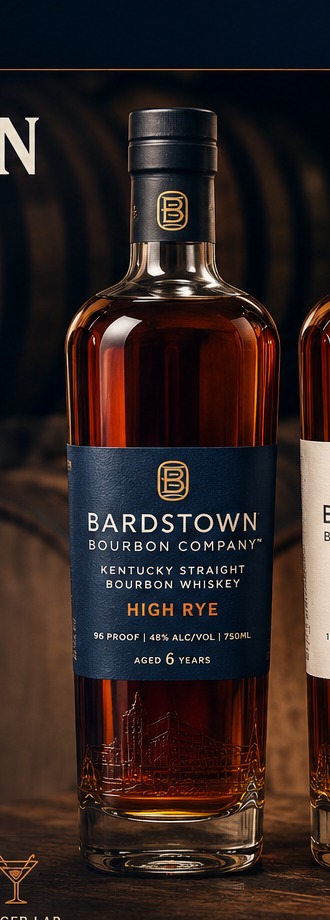
High-Rye Bourbon
Bardstown Bourbon Company High Rye
Bottle #1 in Issue No. 003's three-way mash bill lab: 36% rye, estate-distilled, six years old.
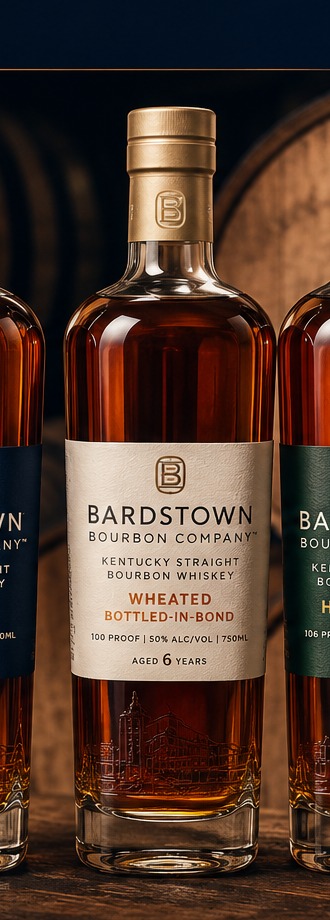
Wheated Bottled-in-Bond · Bottled-in-Bond
Bardstown Bourbon Company Wheated Bottled-in-Bond
Bottle #2 in Issue No. 003's three-way mash bill lab, and the clearest bridge to Issue No. 002's Bottled-in-Bond lesson.
Wheated Bourbon
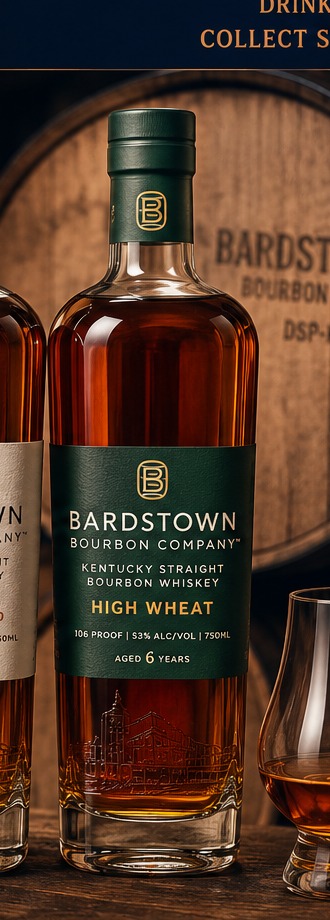
Bardstown Bourbon Company High Wheat
Bottle #3 in Issue No. 003's three-way mash bill lab: 39% wheat, a low 108 barrel-entry proof, and the highest score of the three.
Wheated Bourbon
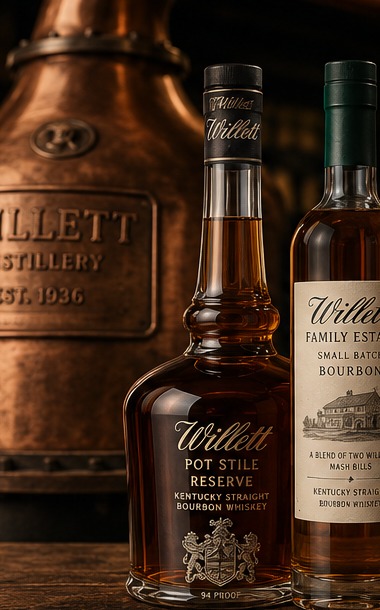
Willett Pot Still Reserve
Issue No. 004's Bottle of the Week — an accessible, wheated modern Willett with a published recipe and lower entry proof.
Pour them in this order: Woodford Reserve first, as your traditional/low-rye baseline. Then Bardstown High Rye, and ask specifically whether the spice reads as pepper, mint, or fruit — the issue’s tasting notes found all three. Then the two Bardstown wheat expressions back to back, Wheated Bottled-in-Bond before High Wheat, paying attention to whether the jump in richness feels like more wheat or more proof (remember: High Wheat is both). Finish on Willett Pot Still Reserve and see whether its higher malt percentage reads as anything distinct from the Bardstown wheated bottle, or whether proof and producer style are doing more of the work than the extra 3% of malt.
Score only what you actually taste — sweetness, spice, body, finish length — before you look back at the mash bill numbers. Write your guess about which grain recipe produced which sensation, then check it. Being wrong here is the useful outcome; it’s exactly the gap this Master Class is about.
Myths, Retired
What mash bills cannot tell you.
The Ledger Takeaway
The mash bill gives you the ingredients. It doesn’t give you the bourbon.
The mash bill is the recipe. It isn’t the result.
Treat a mash bill the way a good cook treats an ingredient list: essential information, genuinely predictive of certain outcomes, and still no substitute for knowing how the dish was actually made. Use it to form a hypothesis about what a whiskey might taste like. Use proof, age, producer, and barrel information to refine that hypothesis. Then taste the whiskey and let it have the final word — because it always does.
Go Deeper
- 27 CFR § 5.143 — Whisky (Standards of Identity for Distilled Spirits) (opens in a new tab)
- TTB — Distilled Spirits Labeling (opens in a new tab)
- Amylolytic Enzymes in Barley and Rye Malts (National Center for Biotechnology Information) (opens in a new tab)
- Commercial Enzymes in Whiskies — Whiskipedia (opens in a new tab)
- The Truth About Barley's Role in Whiskey — SevenFifty Daily (opens in a new tab)
- The Grain of Pain: Distilling with Oats — Distiller Magazine (opens in a new tab)
- KOVAL Distillery — About Us (opens in a new tab)
- KOVAL Distillery — Oat Whiskey (opens in a new tab)
- KOVAL Distillery — Thresh & Winnow Millet Whiskey (opens in a new tab)
- Four Roses Distillery — Our Recipes (opens in a new tab)
- Bardstown Bourbon Company — Estate-Distilled Bourbon (opens in a new tab)