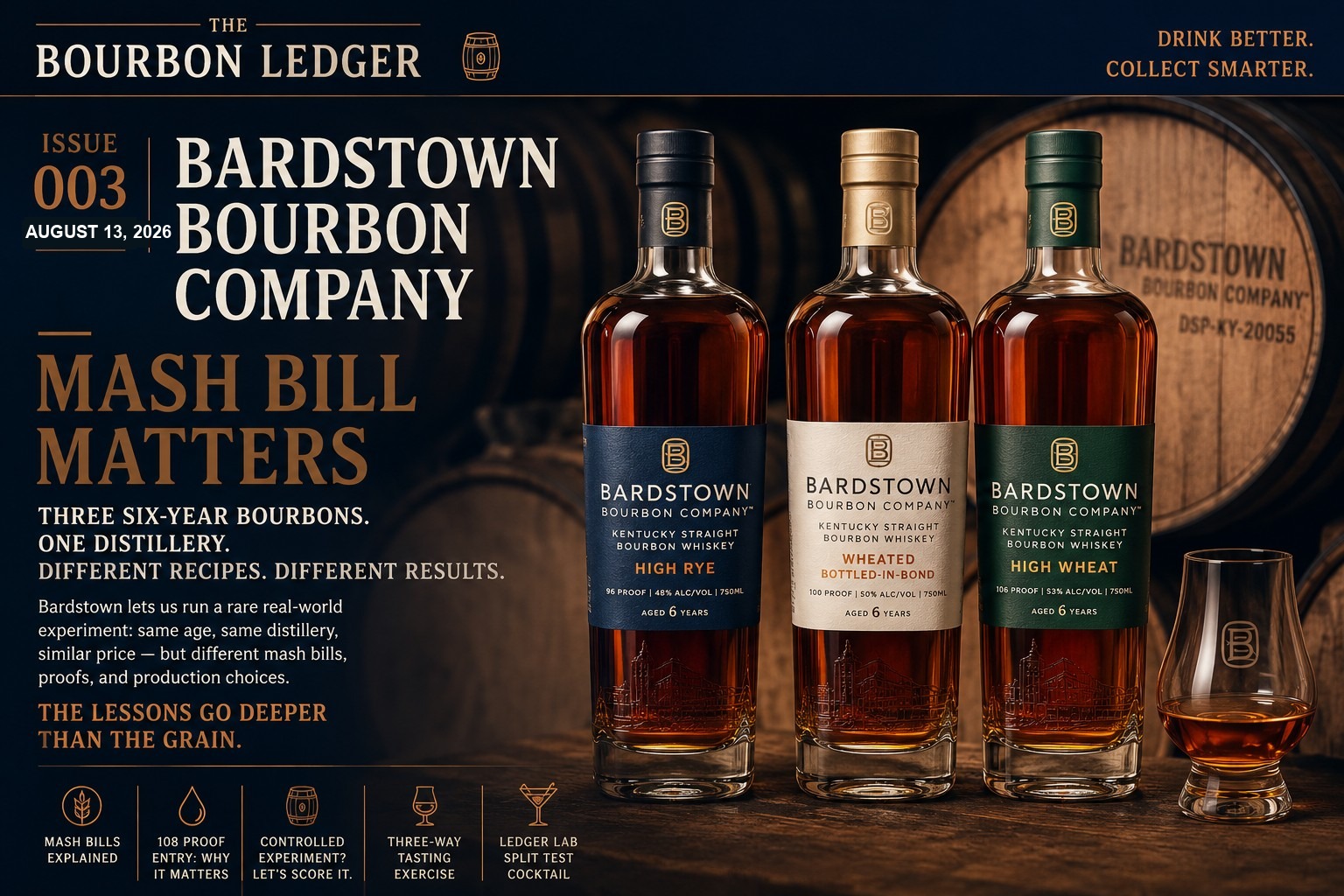
In this issue: Feature — Wheated Bottled-in-Bond. Learn — mash bill ≠ destiny. Taste — three-way side-by-side. Collect — buy the lesson.
Not all of it, though. That is the deeper lesson of this issue.
| Style | Recipe | Proof | Profile |
|---|---|---|---|
| High Rye | 60/36/4 | 96 | Bright fruit, mint, cinnamon, spice, longer finish |
| Wheated BiB | 68/20/12 | 100 | Vanilla, honey, bread, softer spice, rounded oak |
| High Wheat | 53/39/8 | 106 | Richer sweetness, toffee, pastry, fruit, fuller texture |
How Controlled Is This Experiment?
Useful? Absolutely. Laboratory-clean? Not quite.
| Variable | Status |
|---|---|
| Producer / distillery | Controlled |
| Age | 6 years |
| Approx. price | Similar |
| Flavor grain | Changes |
| Corn / malt % | Changes |
| Bottle proof | 96 / 100 / 106 |
| Barrel entry / legal standard | Not identical |
Bottle #1
High Rye: 36% rye is not a seasoning tweak.
At 36% of the recipe, rye occupies more than one-third of the entire mash bill. That is a structural part of the whiskey, not a small adjustment. Bardstown’s profile shows why “rye = pepper” is too simplistic: apricot, orange blossom, mint, caramel, nutmeg, cinnamon and vanilla can all show up.
| Metric | Ledger Rating |
|---|---|
| Ledger Quality | 8.0/10 |
| Value | 9/10 |
| Teaching Value | 9.5/10 |
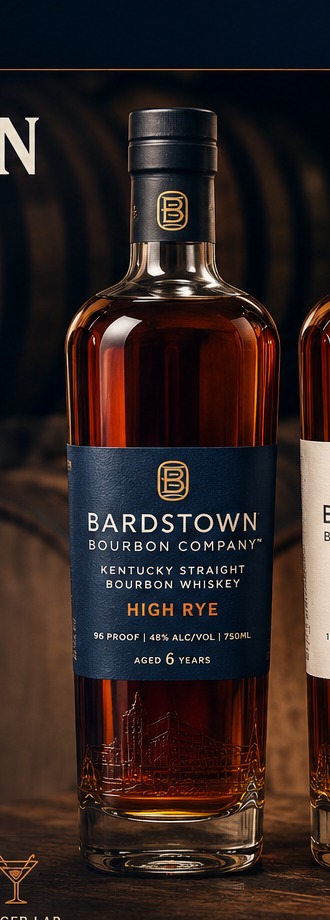
High-Rye Bourbon
Bardstown Bourbon Company High Rye
Bottle #1 in Issue No. 003's three-way mash bill lab: 36% rye, estate-distilled, six years old.
Bottle #2
Wheated Bottled-in-Bond: not just “the sweeter one.”
Remove rye entirely and the recipe becomes 68% corn, 20% wheat and 12% malted barley. The result leans toward creamy vanilla, honey, bread, brown sugar and softer oak, while the 100-proof Bottled-in-Bond format gives it enough structure to stay interesting.
Best teaching bottle: this is the clearest bridge between our mash-bill lesson and Issue No. 002’s Bottled-in-Bond lesson.
| Metric | Ledger Rating |
|---|---|
| Ledger Quality | 8.4/10 |
| Value | 9/10 |
| Teaching Value | 10/10 |
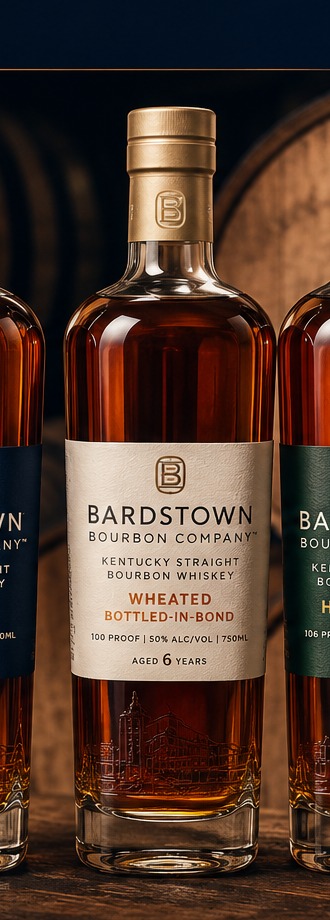
Wheated Bottled-in-Bond · Bottled-in-Bond
Bardstown Bourbon Company Wheated Bottled-in-Bond
Bottle #2 in Issue No. 003's three-way mash bill lab, and the clearest bridge to Issue No. 002's Bottled-in-Bond lesson.
Bottle #3
High Wheat: 39% wheat is only half the story.
High Wheat uses 53% corn, 39% wheat and 8% malted barley. Corn sits only two points above bourbon’s legal minimum. But if this bottle tastes richer or more intense, we cannot honestly credit wheat alone: it is also 106 proof and enters the barrel at a notably low 108 proof.
| Metric | Ledger Rating |
|---|---|
| Ledger Quality | 8.8/10 |
| Value | 9.5/10 |
| Teaching Value | 10/10 |
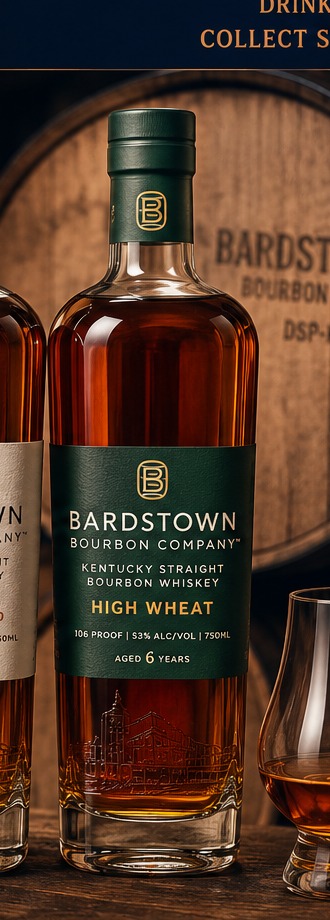
Wheated Bourbon
Bardstown Bourbon Company High Wheat
Bottle #3 in Issue No. 003's three-way mash bill lab: 39% wheat, a low 108 barrel-entry proof, and the highest score of the three.
The Overlooked Grain
Malted barley changes too.
Most readers will stare at rye and wheat. But malted barley shifts from 4% in High Rye to 12% in Wheated Bottled-in-Bond to 8% in High Wheat. Malted barley can matter for both flavor and the mechanics of converting starches into fermentable sugars.
The better question: Is Bardstown changing malt primarily for flavor, fermentation performance, process efficiency, or some combination?
The Identity Trick
Bardstown built a brand before its own bourbon was ready.
Bardstown first built much of its reputation through sourced whiskey, blending, collaboration and contract production. Instead of defining itself around one rigid house flavor made with someone else’s mature distillate, the brand taught customers to expect exploration and multiple profiles.
That meant its estate-distilled whiskey could arrive as a new chapter rather than an identity crisis.
Collector's Corner
Buy the lesson you want to learn.
| What it teaches | Bottle |
|---|---|
| How rye changes structure | High Rye |
| What wheat + 100 proof feels like | Wheated BiB |
| How wheat + lower entry can push richness | High Wheat |
| Which is “best” | Wrong question. Taste all three. |
Weekend Tasting Exercise
The Bardstown Split Test
Pour all three side by side. Score fruit, spice, sweetness, oak, mouthfeel and finish from 1–5. Then ask: Which feels most grain-driven? Which feels most barrel-driven? Which tastes sweetest? Which would you incorrectly guess was highest proof?
Ledger Lab
One Cocktail, Three Bourbons
Ingredients
- 2 oz bourbon
- ¼ oz honey syrup
- 2 dashes Angostura bitters
- 1 dash orange bitters
- 1 large cube
Make it once with High Rye, once with Wheated BiB, and once with High Wheat. Which survives the honey best? Which gets too sweet? Which still dominates the drink? Our hunch: High Rye may make the most balanced cocktail because the spice gives the honey something to push against.
The Experiment Continues
Same Bardstown recipe. Different brand.
A recent Chicken Cock wheated release has been reported as sourced from Bardstown Bourbon Company and using the same 68% corn / 20% wheat / 12% malted barley mash bill as Bardstown’s Wheated Bottled-in-Bond, but at a different age and proof. That’s a future tasting exercise worth hunting down: same distillery, same mash bill, different age, different proof, different brand.
Go Deeper
The mash bill is the recipe. It isn’t the result.
Drink Better. Collect Smarter. 🥃