A bottle comes up for sale. Somewhere in the description — the auction lot, the shop shelf talker, the message from the guy who knows a guy — is a hyphenated name, and the number attached to the bottle is four figures instead of two.
Stitzel-Weller.
Stop there, before the money moves, and ask a question that sounds pedantic and isn’t:
What did I just learn about the liquid?
Not about the label. Not about the romance. About the whiskey in the glass. Because “Stitzel-Weller” is not a flavor. It isn’t a recipe, a family, a company, or even one whiskey. Most of the time it is being used as a Provenance The documented chain of where a whiskey was distilled, aged, blended, bottled and owned. A provenance claim is a claim about that chain — and naming a famous distillery is not the same as proving the liquid came from it. Open in Dictionary → claim — an assertion about where liquid came from — and provenance claims are the kind of thing that can be tested.
The word does more work on a price tag than it does on a label.
This issue is about how to test one.
Part I — The $5,000 Word
Six claims wearing one coat.
When someone says a whiskey “is Stitzel-Weller,” they could be making any of six quite different claims, and the claims are not interchangeable. One of them is nearly impossible to fake. One of them is satisfied by walking through a gift shop.
The Provenance Test
Six claims that all sound like one claim.
Ask which of these a seller is actually making. They are not the same, and the easiest to prove tells you the least about the whiskey.
-
Distilled there
Was this liquid actually made at the Shively plant, by that distillery, before it closed?
What it tells you about the liquid Everything. This is the claim almost everyone thinks they're making.In this issueRequires the distillery to have been operating when the whiskey was distilled — which is a date you can usually estimate yourself.
-
Aged there
Did the barrel spend time in a Stitzel-Weller rickhouse?
What it tells you about the liquid Something real about maturation — and nothing at all about who made the spirit.In this issueBarrels distilled elsewhere have been aged on the Stitzel-Weller site for decades. The address on the warehouse is not the address on the still.
-
Blended or finished there
Was the final liquid assembled, vatted or finished on the site?
What it tells you about the liquid A production step happened there. The spirit could have come from anywhere. -
Bottled there
Did the liquid go into glass at that address?
What it tells you about the liquid Almost nothing about origin. Bottling is the last and most portable step. -
Sold there
Was it bought at the distillery, as a distillery-exclusive?
What it tells you about the liquid Where your credit card was. Nothing else. -
Brand or historical association
Did this brand once belong to the Stitzel-Weller universe, or does it invoke that history?
What it tells you about the liquid A real lineage — of the name. Names and liquid travel separately.In this issueEvery brand in this issue passes this test. Most of them fail the first one.
Keep these six in view. Everything that follows is an exercise in asking which one a seller is actually making.
Part II — Before the Cathedral
Nobody founded Stitzel-Weller in one afternoon.
The story usually gets told as a single founding moment with a single founder, and it was neither.
William Larue Weller founded a whiskey wholesaling business in Louisville in the mid-nineteenth century. He did not run a distillery in the modern sense; W.L. Weller & Sons bought, aged, blended and sold. A. Ph. Stitzel was a distilling company — a maker. The two businesses were complementary rather than competitive, and they worked together for a long time before they were one company.
Prohibition is what fused them. The Stitzel distillery held one of a small number of federal permits to produce and handle medicinal whiskey, and Weller’s distribution network moved that whiskey to pharmacies. A maker with a licence and a seller with a channel is a partnership with obvious logic, and it lasted the whole dry decade.
Repeal turned the partnership into a company. The merger of A. Ph. Stitzel and W.L. Weller & Sons is commonly dated to 1933 — a year we have not been able to tie to a primary record — and was organised by three men the Filson Historical Society names together: Julian P. “Pappy” Van Winkle Sr., Alex T. Farnsley, and Arthur Phillip Stitzel. Two years later they opened a new plant.
Note what this already does to the shorthand. Pappy Van Winkle is the name the modern market remembers, and he was one of three organisers of a merger between two businesses, one of which carried another man’s name on the door. The founding is a committee, not a saint.
Part III — 1935: The House
A distillery built to be looked at.
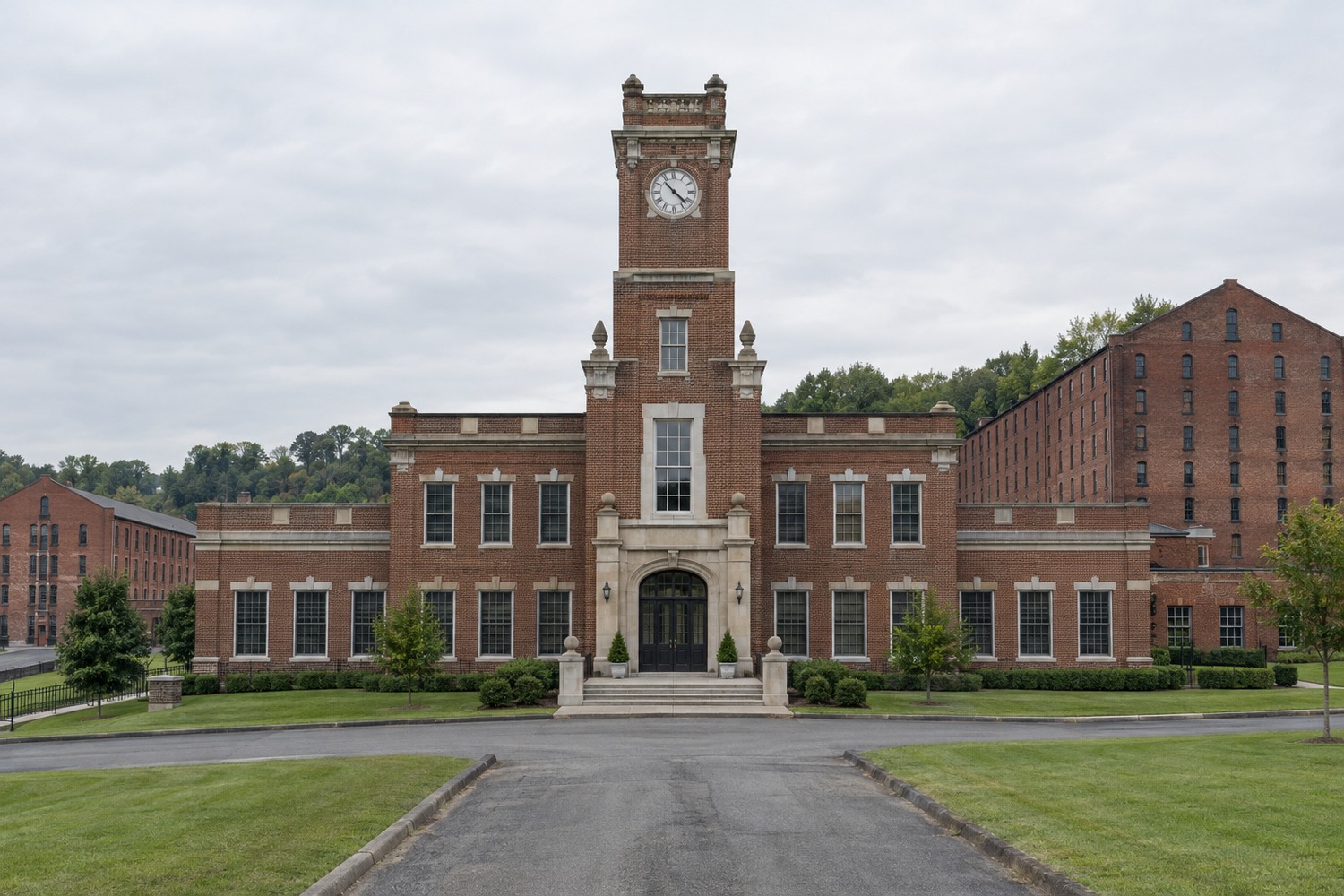
The new plant opened in Shively, outside Louisville, on Derby Day, 1935.
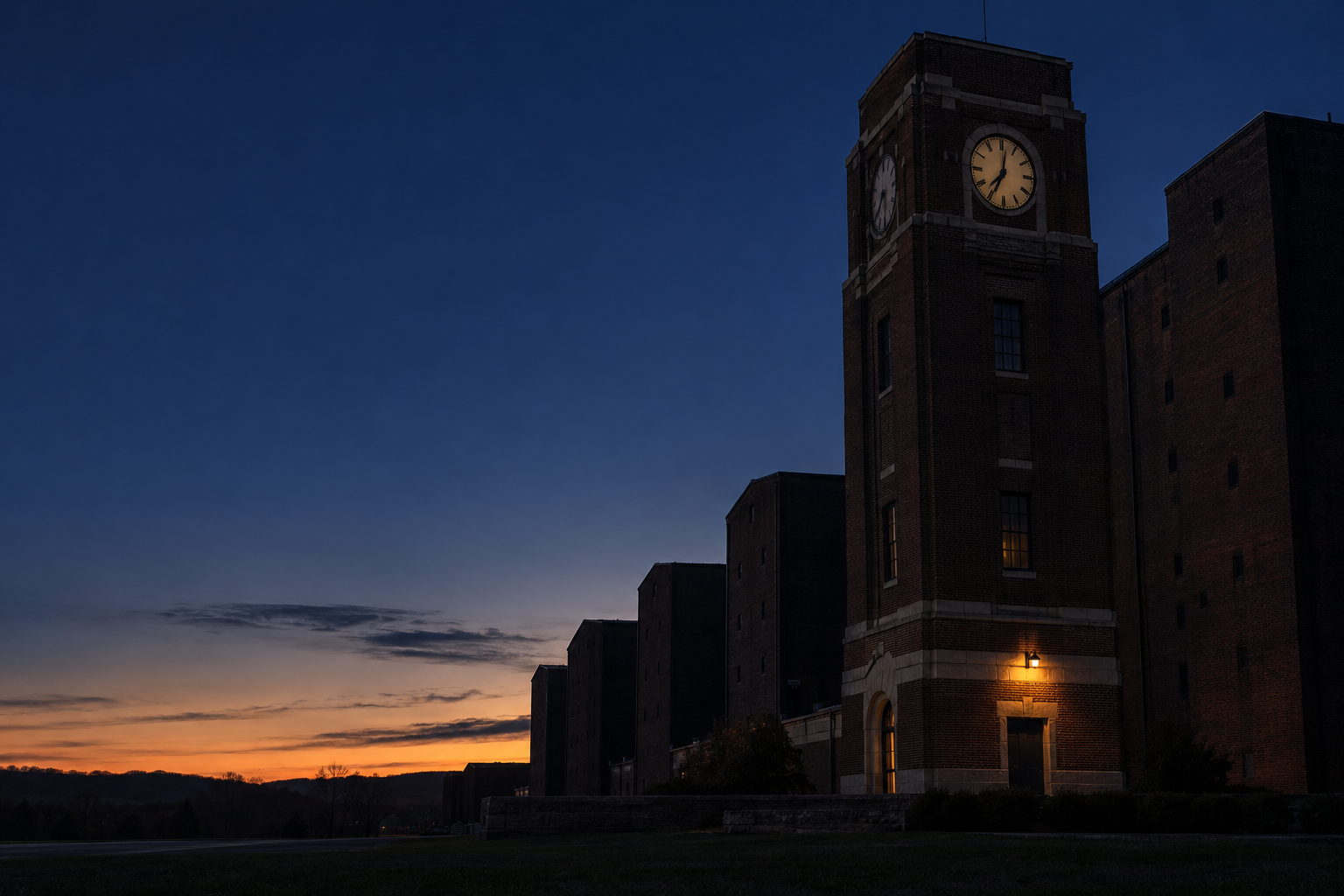
It is worth being specific about why this building acquired the reputation it has. Kentucky distilleries of the period were largely industrial — functional, additive, built out rather than designed. Stitzel-Weller was designed: symmetrical red brick, formal massing, and a clock tower over the entrance that served no production purpose whatsoever. It was a statement that the company intended to be taken seriously, made in brick, at a moment when the industry was rebuilding from zero.
Part IV — The Wheat Myth
Legacy: yes. Invention: unproven.
Here is a sentence you will read on bottle shops, auction listings and a hundred whiskey blogs: William Larue Weller invented wheated bourbon.
The Ledger is not going to print it.
What is well supported is the legacy: the Weller/Stitzel/Van Winkle line is foundational to the modern wheated-bourbon tradition, and the house style that came out of Shively is why a Wheater Enthusiast shorthand for a wheated bourbon — one that uses wheat instead of rye as its secondary grain. Open in Dictionary → is a recognised category today rather than a curiosity. That is a real and large claim, and we are happy to make it.
What is not established is the invention — a specific person, at a specific date, first substituting wheat for rye as the flavoring grain. Distillers were experimenting with grain bills throughout the nineteenth century, records from the period are thin and commercially motivated, and the claim travels today mainly because it is repeated, not because anyone has produced the document.
LEGACY: YES.INVENTION: UNPROVEN.
This matters beyond pedantry, because it is the same failure the rest of this issue is about. A claim gets repeated until repetition feels like evidence. Then it becomes a reason to pay more.
Bourbon School Wheat in Bourbon Wheat replaces rye's spice with softness — less pepper, more perceived sweetness, a rounder texture. It's what built brands like Weller's reputation.Part V — Which Stitzel-Weller?
Fifty-seven years is not one whiskey.
Suppose a bottle genuinely does contain whiskey distilled at Shively. You still don’t know what you have, because you haven’t asked when.
The distillery ran from 1935 to 1992 under three different owners with three different commercial logics. The address never changed, and the plant never stopped being the same plant. Those are the only two things that stayed constant.
Which Stitzel-Weller?
Genuine Stitzel-Weller distillate still needs a date.
Fifty-seven years, three owners, three commercial logics. “It’s Stitzel-Weller” is only half an answer.
1935–1972
The Van Winkle Era
OwnerStitzel-Weller Distilling Co. — Van Winkle, Farnsley and Stitzel interests
- Pappy Van Winkle Sr. leads the company until his death in 1965; his son Julian Jr. follows him
- The house wheated style is established and becomes the distillery's identity
- Old Fitzgerald, Rebel Yell, Cabin Still and W.L. Weller are all house brands
- Rebel Yell is reported to have been created here in the 1930s as a Southern-market exclusive
What this does not tell youThat production was identical across thirty-seven years. This is the longest era by a wide margin, spanning a generational handover and the industry's post-war boom and decline.
1972–1984
The Corporate Transition
OwnerSomerset Importers, a subsidiary of Norton Simon
Operating asRenamed the Old Fitzgerald Distillery
- Julian Van Winkle Jr. is pushed to sell by his partners; family control ends
- The family retains the Old Rip Van Winkle label and contractual rights to buy stock
- The distillery keeps running — this is an ownership change, not a closure
- The plant now carries the name of its flagship brand rather than its founders
What this does not tell youThat the whiskey continued unchanged, or that it changed. A new owner with different priorities ran the plant for twelve years.
1984–1992
The Foote Years
OwnerDistillers Company Ltd, then Guinness, then United Distillers
Operating asEd Foote as Master Distiller
- Foote takes the Master Distiller role in 1984 and holds it until closure
- His distillery journals and logbooks survive in a public archive
- The final logbook covers January 1992 to the final distillation
- United Distillers shuts down distillation in 1992
What this does not tell youPrecisely what changed in production during these years. Foote's records exist and are the place to find out — but we have not examined them, and we are not going to characterise what they say.
Same address. Same distillery lineage. Not necessarily the same whiskey.
Part VI — The First Death
1972: the family leaves. The stills don’t stop.
This is the distinction that reorganises everything.
In 1972 Julian Van Winkle Jr. was pushed by his partners into selling Stitzel-Weller to Somerset Importers, a subsidiary of the conglomerate Norton Simon. The Van Winkle family’s ownership of the distillery ended. The new owner renamed the plant after its best-selling brand: the Old Fitzgerald Distillery.
And production continued for twenty more years.
The family’s exit and the distillery’s death are twenty years apart. Collapsing them is the most common error in this subject.
Two consequences follow, and both are load-bearing.
First: whiskey distilled at Shively between 1972 and 1992 is genuinely Stitzel-Weller distillate, and no Van Winkle owned the place when it was made. The two facts are entirely compatible, and anyone treating “Stitzel-Weller” and “Van Winkle-made” as synonyms has to choose which they mean.
Second: Julian Jr. kept the Old Rip Van Winkle label and a contractual right to buy stock from the distillery he no longer owned. The family’s whiskey business continued — as a buyer. Which brings us to the part of this story that people find hardest to hear.
Part VII — Pappy Is Not a Provenance Statement
A label is not a distillation record.
Nothing in this issue is an argument against Van Winkle whiskey. The quality is not in dispute, the family’s role in bourbon history is enormous, and Julian Van Winkle III kept a name alive through decades when American whiskey was in steep decline. All of that is true.
It is also true that a Van Winkle label, on its own, does not establish where the liquid was distilled.
After 1972 the family had a brand, a reputation and buying rights — not a distillery. Julian III acquired the former Hoffman Distillery at Lawrenceburg; secondary accounts date the purchase to 1983, and the family’s own history gives no year. What that history is specific about is what he did with it: he “began aging, processing and bottling” the Old Rip Van Winkle brand there.
Aging. Processing. Bottling. Not distilling.
So the liquid came from somewhere else, and “somewhere else” was not always Shively. Collector and auction scholarship identifies some early Van Winkle releases of this era as coming from a defunct Louisville distillery called Old Boone — and describes at least one Van Winkle Family Reserve bottling from that stock as a rye-recipe bourbon, not a wheater.
Be precise about what that is. It is attribution by people who handle these bottles and read their labels, not a production record from the distillery. The Ledger has not seen documentation that establishes it, which is why the Lab below returns possible rather than a flat exclusion.
THE LABEL SAIDVAN WINKLE.IT NEVER SAIDWHERE.
If that attribution is right, “Pappy” cannot have meant “wheated Stitzel-Weller whiskey” — because a rye-recipe bottling from another distillery would not exist under the name. And if the attribution is wrong, the point survives intact in a different form: a label that can be argued about this hard is not a provenance statement. Either way, the name did not answer the question.
And today? Van Winkle bourbon has been produced at Buffalo Trace since May 2002, under the family’s partnership with the distillery and to the family’s mash bill specification. Modern Pappy is modern Buffalo Trace whiskey. That is not a criticism. It is a fact about provenance, and it is published by the family themselves.
Bourbon School NDPs & Sourced Whiskey Not every brand on the shelf owns a still. An NDP buys whiskey from someone who does — and that's not automatically a red flag.Part VIII — The Second Death
1992: the stills stop. Almost nothing else does.
United Distillers shut down distillation at the site in 1992. Ed Foote’s final logbook — Folder 24 in his papers at the Filson — carries the heading that ends this part of the story: January 1992 to Final Distillation.
That is where new Stitzel-Weller whiskey stops existing. Forever. Every bottle of genuine Stitzel-Weller distillate that will ever exist was already in a barrel by the end of 1992, and the supply has only ever gone one direction since.
But look at what didn’t die:
- Whiskey already in barrels — thousands of them, still aging
- The brands — Old Fitzgerald, Weller, Rebel Yell, Cabin Still, all saleable assets
- The people — Foote and his colleagues took their knowledge elsewhere
- The recipes and production traditions, which migrated with the people
- The physical site, which Diageo still owns
- The mythology, which was only just getting started
A distillery stops distilling once. Everything else about it survives, gets sold, gets split up, and ends up in different hands. Which is the reason this issue needs its centrepiece.
Part IX — The Diaspora
Five descendants, and not one of them is the heir.
Through the 1990s the brands were sold off, and they did not go to one buyer. Sazerac took the Weller brands. Heaven Hill took Old Fitzgerald — the company dates its own acquisition to 1999. Rebel Yell went to the David Sherman Company, later Luxco, and from there to MGP Ingredients. The Van Winkle family had left in 1972 with a label. Diageo kept the land.
Five descendants. Five different houses. And the interesting question is not who owns what — Issue No. 010 already taught that brand, family, ownership and production are four different things. The question is what actually travelled down each branch.
The Diaspora
Nobody inherited Stitzel-Weller whole.
Seven things could have travelled when the house came apart. They did not travel together.
One distillery, one site, one set of brands, one family in charge for the first thirty-seven years. After 1992 it came apart along seven seams at once, and the pieces went to different places.
W.L. Weller
Produced at Buffalo Trace, Frankfort
Sazerac
- Brand
- ● Travelled intact.
- Liquid
- ○ Did not travel. modern production
- Family
- ○ Did not travel.
- Recipe
- ◐ Travelled in part. wheated tradition
- Place
- ○ Did not travel.
- Ownership
- ○ Did not travel.
- Mythology
- ● Travelled intact.
The name and the wheated idea travelled. The distillery did not. Modern Weller is Buffalo Trace whiskey.
Old Fitzgerald
Produced at Heaven Hill, Bardstown
Heaven Hill
- Brand
- ● Travelled intact.
- Liquid
- ◐ Travelled in part. specific releases
- Family
- ○ Did not travel.
- Recipe
- ◐ Travelled in part. wheated tradition
- Place
- ○ Did not travel.
- Ownership
- ○ Did not travel.
- Mythology
- ● Travelled intact.
The flagship brand, plus — uniquely on this chart — some genuine Stitzel-Weller-filled barrels that came with it.
Van Winkle
Produced at Buffalo Trace since May 2002
Van Winkle family / Buffalo Trace partnership
- Brand
- ● Travelled intact.
- Liquid
- ○ Did not travel. modern production
- Family
- ● Travelled intact.
- Recipe
- ◐ Travelled in part. family specification
- Place
- ○ Did not travel.
- Ownership
- ○ Did not travel.
- Mythology
- ● Travelled intact.
The only branch where the family itself travelled. That is a real inheritance — and it is not the same as inheriting the distillate.
Rebel
Produced under MGP Ingredients
MGP (via Luxco)
- Brand
- ● Travelled intact.
- Liquid
- ○ Did not travel.
- Family
- ○ Did not travel.
- Recipe
- ○ Did not travel.
- Place
- ○ Did not travel.
- Ownership
- ○ Did not travel.
- Mythology
- ◐ Travelled in part. nostalgic, not traded on
Reported to have been created at Stitzel-Weller in the 1930s. Today the name is the only thing still connected, and the brand makes little of it.
The site
Visitor centre and warehouses, Shively
Diageo
- Brand
- ○ Did not travel.
- Liquid
- ◐ Travelled in part. aging stock
- Family
- ○ Did not travel.
- Recipe
- ○ Did not travel.
- Place
- ● Travelled intact.
- Ownership
- ○ Did not travel.
- Mythology
- ● Travelled intact.
Holds the ground, the buildings, the name and most of the romance — and stopped distilling in 1992.
Nobody inherited Stitzel-Weller whole.
Part X — The Ghost Business
Why a dead distillery got more famous after it died.
Stitzel-Weller does not appear to have been a cult object while it was running. It was a working distillery making widely available wheated bourbon, through decades when American whiskey was in a long commercial decline — a period that produced very little of the collector behaviour the name attracts today.
The mythology was built afterwards, and the mechanism is not mysterious:
The supply became permanently finite in 1992. Not scarce — finite. Scarcity can be relieved; a closed distillery cannot make more.
The bourbon boom arrived a decade later, and bourbon drinkers went looking for history at exactly the moment the history had stopped being producible.
The Van Winkle name became a phenomenon in the mid-1990s and beyond, dragging the distillery’s reputation along behind it — retroactive acclaim attached to a plant that had closed before most of the people chasing it had tasted anything from it.
And the word itself started appearing on new things. A property reopened as a visitor centre. Brands launched on the site. Releases named for the distillery.
The result is a premium attached to a word. That premium is real money — the 2025 Stitzel Reserve carried a $1,600 distillery-exclusive price and a $200 bar pour — and the word is doing the work.
THE WHISKEY IS FINITE.THE WORD IS NOT.
Part XI — Stitzel Reserve
Do the arithmetic. Then watch it fail.
In June 2025 the Stitzel-Weller site released Stitzel Reserve, a 24-year-old Kentucky straight bourbon. Nine barrels. 191 bottles. Cask strength at 61.7% ABV. Sold only at the distillery.
Run the arithmetic. Then watch what it does and does not give you.
| Step | Value |
|---|---|
| Year of release | 2025 |
| Age statement | 24 years |
| Latest possible distillation year | 2000–2001 |
| Earliest possible distillation year | Not established |
| Stitzel-Weller distillation ceased | 1992 |
Most people, this one included on a first pass, read that table as “distilled around 2000, so it can’t be Stitzel-Weller.” That reading is wrong, and the reason it is wrong is worth more than any single fact in this issue.
An age statement is a floor, not a measurement. It guarantees the youngest whiskey in the bottle met that age. It says nothing about the oldest. A bottle marked 24 years must contain nothing younger than 24 years — and may contain barrels considerably older.
So the subtraction gives you one date, and only one: the latest year this whiskey could have been distilled. Everything before that stays open.
Bottling year minus age tells you the latest a whiskey could have been made. It tells you nothing about the earliest.
Which means the tool is sharp in one direction and blunt in the other. It eliminates distilleries that opened too late — a plant that started producing in 2010 cannot have made a 24-year-old whiskey released in 2025. It does not eliminate distilleries that closed too early, because an older barrel satisfies a younger age statement without contradiction.
Stitzel-Weller closed too early. The arithmetic therefore does not exclude it, and the verdict most people reach from this table — the one this issue reached in draft — does not survive contact with what an age statement actually promises.
In 2026 a second release sharpened the point. The Stitzel Reserve 31-year-old — 13 barrels, 176 bottles, $3,000 — is described by Diageo as “distilled in 1992 by a historic Kentucky bourbon producer and aged on-site at Stitzel-Weller Distillery.”
1992. The exact final year of Stitzel-Weller distillation, stated outright, with three decades of on-site aging after it. Here the company has given us the distillation year directly, so there is no arithmetic left to do — and it still doesn’t settle anything, because the sentence names a year without naming a distillery.
The phrase carrying the weight is the same one: “a historic Kentucky bourbon producer.” Stitzel-Weller was one.
So both releases land in the same place, by two different routes. On the 24-year the arithmetic can’t exclude Shively because age statements are floors. On the 31-year the date matches Shively exactly and the producer is withheld. Neither is established as Stitzel-Weller whiskey. Neither is ruled out.
The most honest verdict in this issue is the one that admits the evidence runs out.
Possible is not probable. The pressure runs against Shively in both cases, for the reason set out above — and it remains an inference about commercial behaviour rather than a record of production.
Which leaves the uncomfortable answer that this issue has been building toward. On the two bottles that carry the distillery’s own name, sold at its own gate, the evidence available to a careful reader does not reach a verdict. It reaches possible, and stops.
Bourbon School Dating a Bottle Bottling date minus age statement gives one thing: the latest the youngest whiskey in the bottle could have been distilled. Not an exact year, not a window — and the bottling date is usually an estimate too.Part XII — The Ghost Shelf
Four bottles. Four different connections.
Put the descendants on one shelf and the problem becomes visible. Each of these is legitimately connected to Stitzel-Weller. No two are connected the same way, and only one of them has a documented claim to the distillate itself.
The Ghost Shelf
Four bottles. Four different kinds of connection.
Every one of these is linked to Stitzel-Weller, and the links are not the same link. Only one column below describes what is in the glass.
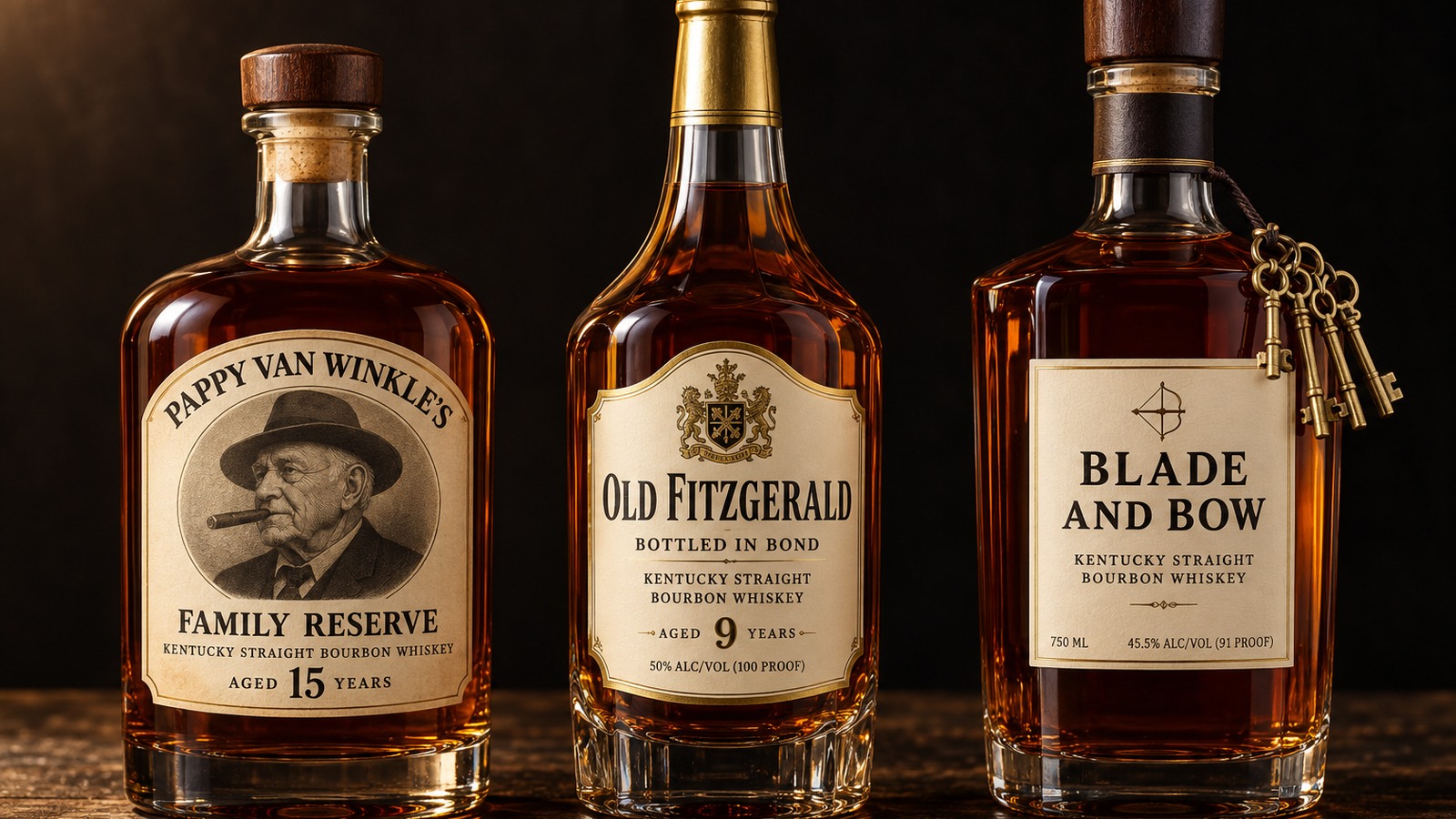
Editorial illustration · not a historical photograph · Stitzel Reserve is described below but not depicted
Van Winkle
Van Winkle family / Buffalo Trace
No Stitzel-Weller distillate.Connection
Family and brand lineage — the only branch down which the family itself travelled.
Stitzel-Weller distillate
None in current production
Old Fitzgerald
Heaven Hill
Documented, specific releases.Connection
Historical brand and stock lineage — the flagship brand, acquired in 1999, and with it barrels filled at Shively.
Stitzel-Weller distillate
Documented in specific releases
Blade and Bow
Diageo
Claimed, proportion undisclosed.Connection
Historic place, and a claimed partial-liquid connection — made and sold on the site, using a solera the company says carries older Stitzel-Weller stock.
Stitzel-Weller distillate
Claimed, proportion undisclosed
Central to the story, not pictured
Stitzel Reserve
Diageo
Connection
Name, place and aging — the distillery's own name, its warehouses, and its gate shop.
Stitzel-Weller distillate
Not established either way for either release
The Blade and Bow case deserves its own sentence, because it is the genuinely hard one. Diageo says its solera system — a method borrowed from sherry, in which a vessel is only ever partly drawn off and is then topped up again — incorporates bourbon from the Stitzel-Weller distillery into every bottle, with no barrel ever fully drained. Three things need separating here. There is the company’s claim, which is that Stitzel-Weller whiskey is in every bottle. There is the mathematics of an idealised solera, in which a vessel only ever partly drawn off retains a fraction of its original fill that shrinks toward zero without arriving. And there is what has been demonstrated about any actual bottle, which is nothing: the proportion is undisclosed, blending systems in the real world get emptied, re-racked and rebuilt, and no independent analysis of the contents has been published.
The second of those is a property of a model. It is not evidence about the third.
That is not a lie and it is not a proof. It is a company claim about a proportion nobody outside the company can measure — which is its own category, and the reason our verdict scale has five positions instead of two.
Part XIII — Collect Smarter
Prove it.
Here is the method, and it works on any distillery, not just this one.
- 1. Identify the bottling year, or the tightest window you can build from tax strips, label text, government warnings, barcodes and the producer's stated address.
- 2. Read the age statement. If there isn't one, you have lost your best tool and should lower your confidence accordingly.
- 3. Subtract. Bottling year minus age gives the LATEST year the whiskey could have been distilled. It gives you no earliest year, because an age statement is a floor on the youngest barrel in the bottle.
- 4. Check the credited distillery against that latest date. A distillery that opened after it is eliminated. A distillery that closed before it is NOT — an older barrel satisfies a younger age statement.
- 5. Identify who owned the brand and who bottled it at that time. Ownership changes are often the most datable thing on a label.
- 6. Ask what evidence exists for the source: a DSP number, a producer statement, a documented barrel transfer, an archival record. The TTB's public COLA registry carries approved label records and is the first place to look; a distillery's own archive is the second.
- 7. Classify the claim, and say which claim you are classifying.
A DSP Distilled Spirits Plant — the federal registration number a US facility producing, bottling or warehousing spirits must hold, printed in small text on many labels. A DSP identifies a registered plant, not automatically the one that distilled the contents: depending on the operation and the label wording it may name the bottler instead. It is the best lead on a back label, not proof of origin. Open in Dictionary → identifies a federally registered distilled spirits plant — but which plant, and doing what, depends on the operation and on how the label is worded. The DSP shown may be where the whiskey was distilled, or only where it was bottled. Treat it as the best lead on a back label, not as proof of origin.
Then use one vocabulary. The Ledger’s provenance verdicts, from here on:
| Verdict | What it means |
|---|---|
| PROVEN | Direct documentary evidence establishes the claim. |
| STRONGLY SUPPORTED | Multiple credible pieces of evidence converge, but the complete primary chain isn't available. |
| POSSIBLE | The chronology permits it. The evidence doesn't establish it. |
| ASSOCIATED | A real connection — place, brand, family, ownership, aging, bottling — that does not establish distillation. |
| IMPOSSIBLE | Dates, source or records rule it out. |
And always say what the verdict applies to. Not “impossible” — impossible as Stitzel-Weller distillate. The bottle might be excellent. It might be a fair price. Those are different questions, and this scale answers none of them.
Part XIV — Ledger Lab
Six real cases. Reach a verdict.
Ledger Lab
Prove the bottle.
Six real cases. Read the claim and the evidence, reach your own verdict, then open the answer. No tasting required — this one is an evidence exercise.
The verdict scale
- PROVEN
- Direct documentary evidence establishes the claim.
- STRONGLY SUPPORTED
- Credible evidence converges; the full primary chain is unavailable.
- POSSIBLE
- Chronology permits it; evidence doesn't establish it.
- ASSOCIATED
- A real connection that isn't distillation.
- IMPOSSIBLE
- Dates or records rule it out.
Case 01
John E. Fitzgerald Very Special Reserve
Heaven Hill
The claim as it's made
This bourbon is Stitzel-Weller whiskey.
The proposition being tested
The whiskey in this bottle was DISTILLED at the historic Stitzel-Weller distillery in Shively.
Separately established, and not what is being tested
Brand lineage is not in question: Old Fitzgerald was the Shively flagship and Heaven Hill acquired it. The open question is the liquid.
The evidence
- Company claim Heaven Hill states it acquired the Old Fitzgerald line in 1999, and that these barrels were filled and put up in the Stitzel-Weller rickhouses seven years earlier.
- Company claim After acquisition the barrels were moved to Warehouse Y at Heaven Hill's Bardstown campus, then transferred to inert tanks in 2013 to arrest aging.
- Documented Stitzel-Weller distilled until 1992, which is consistent with a fill seven years before 1999.
The reasoning
The producer makes a specific, checkable claim about where and when these barrels were filled, and the date it implies falls inside the distillery's operating life rather than outside it. The chain afterwards — Bardstown, then tanks — is documented by the company too. What is missing is independent primary documentation of the fill itself.
Show the verdict
STRONGLY SUPPORTED
as Stitzel-Weller distillate
Specific, internally consistent and chronologically possible — but resting on the producer's own account rather than an independent record. Note what it also demonstrates: distilled at one distillery, aged at two, owned by two companies, bottled by the second. Four different answers to four different questions.
Case 02
Stitzel Reserve 24 Year Old
Diageo, June 2025 — 191 bottles
The claim as it's made
A 24-year-old bourbon released by the Stitzel-Weller distillery is Stitzel-Weller whiskey.
The proposition being tested
The whiskey in this bottle was DISTILLED at the historic Stitzel-Weller distillery.
Separately established, and not what is being tested
Site association is real and not disputed: this was released by, aged at and sold at the Stitzel-Weller property, under its name. None of that is a distillation claim, and none of it is what this card tests.
The evidence
- Documented Released 2025 with a 24-year age statement, establishing a latest possible distillation year of 2000–2001.
- Documented An age statement is a floor on the youngest whiskey in the bottle, so no earliest distillation year is established.
- Documented Stitzel-Weller's final distillation took place in 1992 — earlier than the latest possible year, not later.
- Evidence absent Diageo's launch material makes no distillation claim; it refers only to archival barrels.
- Reported Whisky Advocate reports Diageo as saying it is 'not contractually able to disclose where the whiskey was distilled, nor by whom', and as offering only that it came from 'another historic Kentucky bourbon distillery'. That phrasing comes from the reporting, not from Diageo's own published announcement, and no source has been confirmed.
The reasoning
The tempting move is to subtract 24 from 2025, land on 2001, and rule Shively out by nine years. It doesn't work. The age statement fixes only the latest date this whiskey could have been made; a barrel filled in 1992 is thirty-three years old in 2025 and satisfies a 24-year statement without contradiction. Arithmetic eliminates distilleries that opened too late. It cannot eliminate one that closed too early.
Show the verdict
POSSIBLE
as Stitzel-Weller distillate
Nothing in the public record excludes it, and the arithmetic that appears to is being misread. What pushes against Shively is Diageo's own phrasing and the commercial logic of not making the stronger claim — a reason to doubt, not a finding. Note also where the fault does not lie: the company never claimed Stitzel-Weller distillation. That inference came from the name on the bottle and the address of the shop.
Case 03
Stitzel Reserve 31 Year Old
Diageo, 2026 — 176 bottles
The claim as it's made
A bourbon distilled in 1992 and aged at Stitzel-Weller for three decades is Stitzel-Weller whiskey.
The proposition being tested
The whiskey in this bottle was DISTILLED at the historic Stitzel-Weller distillery — as distinct from having been aged there.
Separately established, and not what is being tested
Aging on the Stitzel-Weller site for more than three decades is stated by Diageo and is not in question. Nor is the 1992 distillation year. The single unresolved element is who distilled it.
The evidence
- Company claim Diageo states it was 'distilled in 1992 by a historic Kentucky bourbon producer and aged on-site at Stitzel-Weller Distillery'.
- Documented 1992 is the final year of Stitzel-Weller distillation — the era matches exactly.
- Evidence absent Diageo does not name the distiller. Its announcement says only 'a historic Kentucky bourbon producer' — wording that describes Stitzel-Weller as accurately as it describes anyone else, and so excludes nothing.
The reasoning
Everything lines up: the right year, the right warehouses, three decades on the property. And the one sentence that should settle it doesn't. 'A historic Kentucky bourbon producer' describes Stitzel-Weller perfectly well — it was one — so the phrasing neither confirms nor excludes it. Read it one way and Diageo is politely saying 'someone else'. Read it another and it is a formula that avoids saying anything at all.
Show the verdict
POSSIBLE
as Stitzel-Weller distillate
1992 falls inside the distillery's operating life, so the chronology permits it — and nothing in the public record excludes it. What pushes against it is commercial logic rather than evidence: if Diageo could have said 'distilled here', that is a far stronger claim than the one it made, and it had every reason to make it. That is a Ledger inference, not a finding. Possible is not probable, and this is the one case in the issue where the honest answer is that we do not know.
Case 04
Blade and Bow
Diageo — the standard solera release
The claim as it's made
Every bottle contains Stitzel-Weller whiskey.
The proposition being tested
Some quantity of whiskey DISTILLED at the historic Stitzel-Weller distillery is present in each bottle. Note that this is a weaker proposition than the other cards test — presence of a fraction, not origin of the whole.
Separately established, and not what is being tested
Production and bottling on the Stitzel-Weller site are documented. So is the brand's association with the property. Neither establishes what is in the liquid.
The evidence
- Company claim Diageo states the solera system incorporates bourbon from the Stitzel-Weller distillery into every bottle, with no barrel ever fully drained.
- Documented The brand is produced and sold at the Stitzel-Weller site, which Diageo owns.
- Evidence absent The proportion of Stitzel-Weller distillate is not disclosed and is not independently verifiable.
- Ledger inference In an idealised solera, repeated topping-up dilutes the original fraction toward zero without reaching it. That is a property of the model, not a measurement of any bottle, and real systems are emptied and rebuilt.
The reasoning
The claim is structural rather than quantitative. A solera run as described would be consistent with Stitzel-Weller whiskey being carried forward — but a method that is consistent with a claim does not verify it, and nothing here independently establishes the contents of any individual bottle, or how much. Accepting it means accepting a company's account of its own blending, which is not nothing and is not proof.
Show the verdict
POSSIBLE
as containing some Stitzel-Weller distillate
The mechanism is plausible, openly described and chronologically coherent, but unverifiable from outside and silent on proportion. Note the claim this verdict applies to: 'contains some' is a far weaker claim than 'is', and it is the only one the evidence addresses.
Case 05
Van Winkle Family Reserve, Old Boone stock
Bottled c. 1990–1991 from 1970s barrels
The claim as it's made
A vintage Van Winkle bottling is Stitzel-Weller whiskey.
The proposition being tested
The whiskey in this particular bottling was DISTILLED at the historic Stitzel-Weller distillery.
Separately established, and not what is being tested
Family and brand lineage are genuine and complete — this is a real Van Winkle bottling from the Van Winkle family's own business. Lineage is not the question; the still is.
The evidence
- Reported Collector and auction scholarship identifies early Van Winkle releases of this era as sourced from the defunct Old Boone distillery in Louisville.
- Reported At least one such bottling is described as a rye-recipe bourbon — not a wheater.
- Company claim The family's own history records that Julian III used the former Hoffman Distillery for aging, processing and bottling, not distilling.
The reasoning
The label carries the family name and the era is right, which is exactly why the shortcut is tempting. Two things cut against Shively: the family was a buyer in this period rather than a distiller, and collector scholarship identifies this stock as Old Boone — supported by a rye recipe that is not the Shively wheated house style. But both of those are reported attribution, not production records, and this issue does not award its strongest verdict on reported evidence when it has just declined to do so for Diageo.
Show the verdict
POSSIBLE
as Stitzel-Weller distillate, for this bottling
What remains possible is narrow and worth stating exactly: the family held genuine rights to buy Stitzel-Weller stock in this period, so a Van Winkle bottling of this era COULD contain it, and no production record has been produced either way for this one. The reported evidence points firmly at Old Boone and we think it is probably right — but probably is not a verdict. The lesson does not depend on which way it falls: the label never answered the question, and you cannot read the answer off the name.
Case 06
Rebel
MGP Ingredients — current production
The claim as it's made
Rebel is a Stitzel-Weller brand.
The proposition being tested
Whiskey sold under the Rebel name today was DISTILLED at the historic Stitzel-Weller distillery.
Separately established, and not what is being tested
Brand origin at Shively is consistently reported and we have no reason to doubt it, though the Ledger has not seen a primary record of the brand's creation. Either way that is a lineage claim, and this card tests a liquid claim.
The evidence
- Reported Rebel Yell is widely reported to have been created at Stitzel-Weller in the 1930s as a Southern-market exclusive. The Ledger has not located a primary record of its creation.
- Documented The brand was sold after the 1972 break-up, passing to David Sherman, later Luxco, and to MGP Ingredients when it completed its acquisition of Luxco in April 2021.
- Reported The name was shortened from Rebel Yell to Rebel in 2020.
The reasoning
The historical origin is credible and consistently reported — this brand does appear to have been born at Shively, though the Ledger has not located a primary record of its creation. Everything else moved away: different owner, different distillery, different liquid, decades of separation.
Show the verdict
ASSOCIATED
as a historical brand connection only — not as Stitzel-Weller distillate, which is not established
A real historical connection, reported rather than documented, that establishes nothing whatsoever about the modern liquid. Rebel is the cleanest illustration in the issue of a brand surviving its distillery completely intact — and to the brand's credit, it isn't currently trading on it.
Part XV — The Ledger Cocktail
Two branches, one glass.
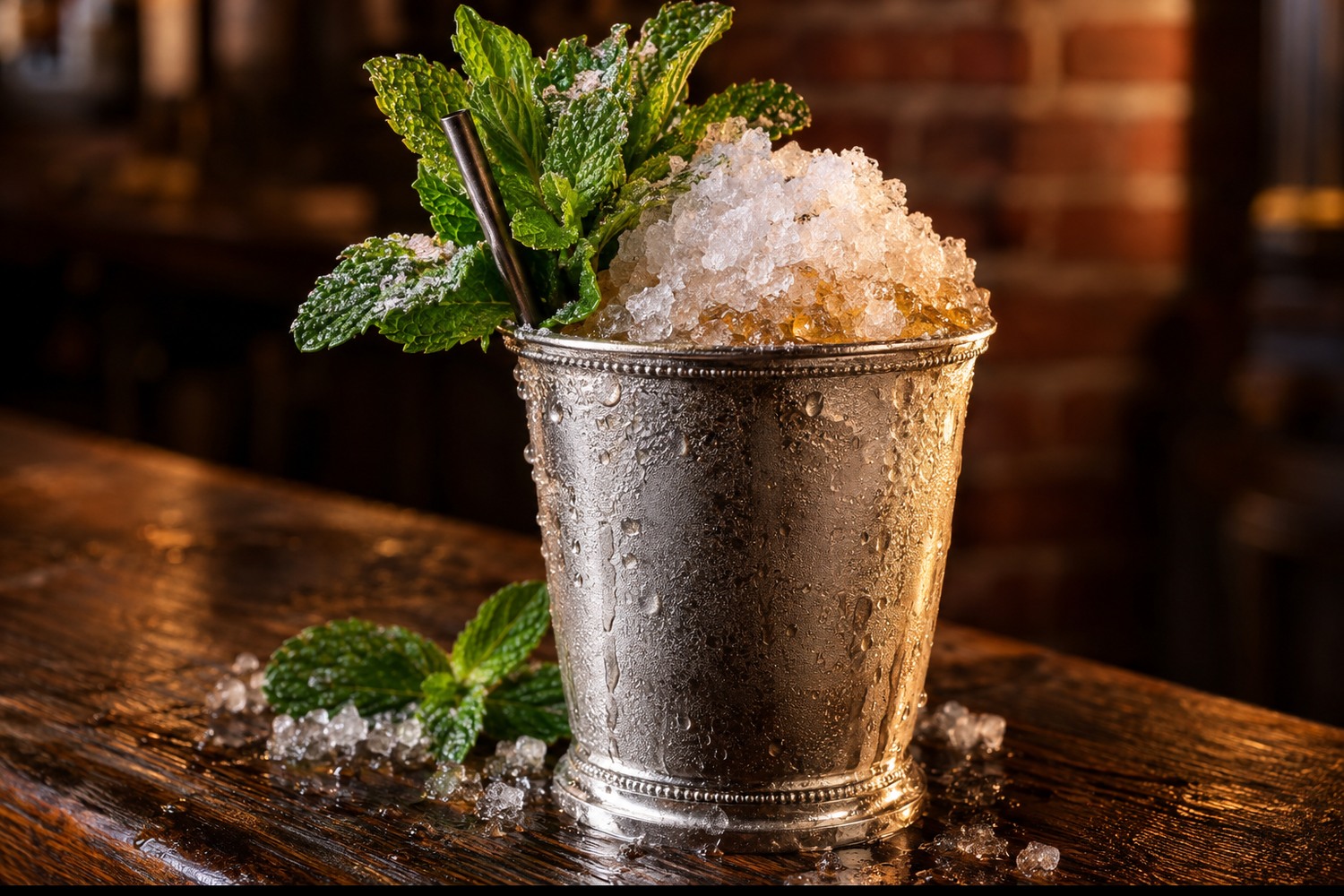
Stitzel-Weller opened on Derby Day, 1935. That is not decoration; it is the reason this issue’s drink is a julep rather than another Manhattan.
But a straight julep would waste the opportunity. The point of this issue is that the house came apart and its descendants went to different homes — so the drink splits its base between two of them, and reunites in the glass what 1999 separated.
The Ledger Cocktail — Issue No. 011
The Derby Day Split
Ingredients
- 1¼ oz W.L. Weller Special Reserve (Buffalo Trace branch)
- 1¼ oz Old Fitzgerald Bottled-in-Bond (Heaven Hill branch)
- ⅓ oz demerara syrup (2:1)
- 8–10 fresh mint leaves
- Crushed ice
Method
- Put the mint and syrup in the cup and press the leaves gently against the side — enough to release oil, not enough to shred them.
- Add both bourbons and stir briefly to combine.
- Fill with crushed ice and swizzle until the cup frosts.
- Mound more crushed ice on top, slap the mint bouquet once and set it against the ice. Serve cold.
Two wheated bourbons, one from each surviving production branch of the Stitzel-Weller diaspora, split evenly so neither dominates. Published as a specification, not a tasting note — see below.
Why these two. They are the pair that makes the argument honestly. Weller and Old Fitzgerald were both house brands at Shively. In 1999 they went to different buyers and are now made at different distilleries — Weller at Buffalo Trace under Sazerac, Old Fitzgerald at Heaven Hill. Both carry the wheated tradition forward; neither contains Stitzel-Weller distillate in standard production. Siblings raised in different houses.
Structurally the split works because each brings something the other lacks. Old Fitzgerald Bottled-in-Bond arrives at a fixed 100 proof with an age statement, giving the drink a spine that survives crushed ice. Weller Special Reserve sits lower and softer and would be bullied into silence by a full julep’s dilution on its own. Together they land in the mid-90s proof range, which is roughly where a julep wants to be.
The demerara is deliberate: plain simple syrup disappears against wheated bourbon, and the point here is to taste two whiskeys, not sugar.
Part XVI — Deep Cut
The whiskey changed before the distillery died.
One last correction to the mythology, and it is the one enthusiasts resist hardest.
“Stitzel-Weller” is spoken as though it names a single timeless flavour — as though a barrel filled in 1951 and a barrel filled in 1991 are the same object, separated only by paperwork. They are not. They were filled under different owners, different management, different commercial pressure and almost certainly different practice.
Ed Foote ran the stills for the last eight years. His distillery journals and logbooks survive in the Filson Historical Society, folder by folder, ending with January 1992 to Final Distillation. Somewhere in those pages is a real answer to what changed and when.
We have not read them. So we are not going to tell you what they say.
What we can say is that the record exists, which is more than the mythology has ever offered.
That restraint is the point. The romance wants Stitzel-Weller to be one unchanging thing, because one unchanging thing is easier to sell, easier to chase and easier to feel certain about. The archive suggests something messier and more interesting: a working distillery that made different whiskey at different times, under people who had names and made decisions.
Even genuine Stitzel-Weller distillate needs a date before it means anything.
The Last Word
Prove it.
A bottle comes up for sale, and somewhere in the description is a hyphenated name.
Now you know what to do with it. Find the bottling year. Read the age statement. Subtract. Ask whether the distillery was running then. Ask who owned the brand, who bottled the liquid, and what evidence exists for where the spirit was made. Then say which of the six claims is actually being made, and how strong it is.
Sometimes the answer will be strongly supported, and you will have bought something real. More often it will be associated — a genuine connection to a genuine history, which is worth something, just not what the price assumed.
IT ISN'T A FLAVOR.IT ISN'T A BRAND.IT ISN'T EVENONE WHISKEY.
Stitzel-Weller is a provenance claim.
And a claim is only worth what the evidence behind it is worth.
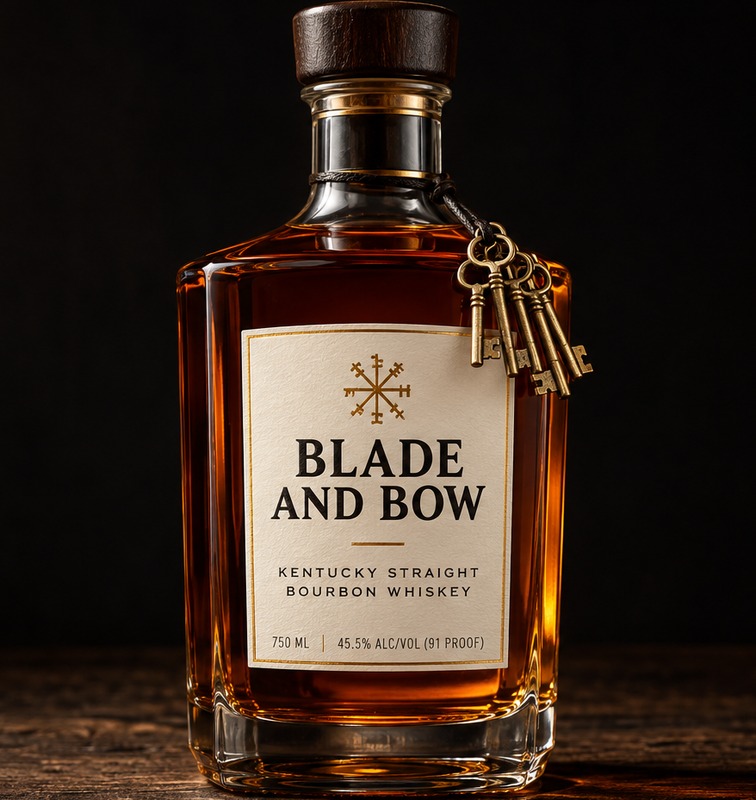
Solera-aged · Straight Bourbon
Blade and Bow
Issue No. 011's featured bottle — made and sold at the Stitzel-Weller site, with a solera the company says carries older Stitzel-Weller stock in every bottle.
Fair Value
Sources & Further Reading
- Filson Historical Society — Van Winkle Family Films (Mss. A V285) (opens in a new tab) Finding aid; circa 1934-1935 construction and grounds footage; founders of the merger named.
- Filson Historical Society — Edwin Scott Foote papers (Mss. A F688b) (opens in a new tab) Master Distiller 1984–1992; logbooks through final distillation.
- Old Rip Van Winkle — Heritage (opens in a new tab) The Van Winkle family's own chronology. Attributed as such throughout.
- Heaven Hill — John E. Fitzgerald Very Special Reserve release (opens in a new tab) 1999 acquisition; barrels filled in the Stitzel-Weller rickhouses; transfer to Bardstown and to tanks in 2013.
- Diageo — Stitzel Reserve launch release (opens in a new tab) 24-year-old; nine barrels; 191 bottles; June 2025. Makes no distillation claim.
- Whisky Advocate — 'Stitzel-Weller Releases Stitzel Reserve 24 Year Old', Julia Higgins, 10 June 2025 (opens in a new tab) Diageo 'not contractually able to disclose where the whiskey was distilled, nor by whom'; 61.7% ABV; $1,600; $200 pour.
- Diageo — Stitzel Reserve 31 Year Old release (opens in a new tab) 'Distilled in 1992 by a historic Kentucky bourbon producer and aged on-site'; 13 barrels; 176 bottles; $3,000.
- Sotheby's — Van Winkle Bourbon: A Comprehensive Collector's Guide (opens in a new tab) Old Boone sourcing for early Van Winkle releases; 1972 sale to Somerset Importers.
- The Spirits Business — MGP completes $475m Luxco acquisition (opens in a new tab) April 2021 completion; Rebel's current corporate home.
- Whisky Magazine — 'Short History of Stitzel-Weller', Fred Minnick, 2 September 2016 (opens in a new tab) Norton Simon's 1972 purchase and the rename; Somerset Imports as managing subsidiary; Distillers Co's 1984 acquisition; distilling ceasing in 1992 and shifting to Bernheim; United Distillers selling brands and stocks through the 1990s.
- Diageo Bar Academy — Blade and Bow (opens in a new tab) The solera claim: bourbon from the Stitzel-Weller distillery incorporated into every bottle, with no barrel fully drained. A company statement about its own blending.