Ask most people how bourbon is made and you’ll get one sentence: “corn, water, a barrel, time.” That’s not wrong. It’s also missing most of the actual decisions that determine what ends up in your glass.
The Deeper Lesson
Seven steps, seven flavor decisions.
Mashing. A distiller cooks a grain recipe — the mash bill — with water, converting starch into fermentable sugar. This is where the corn/rye/wheat/barley ratio gets decided.
Fermentation. Yeast converts that sugar into alcohol — and, along the way, produces the flavor-active byproducts that shape aroma before the whiskey ever sees a still.
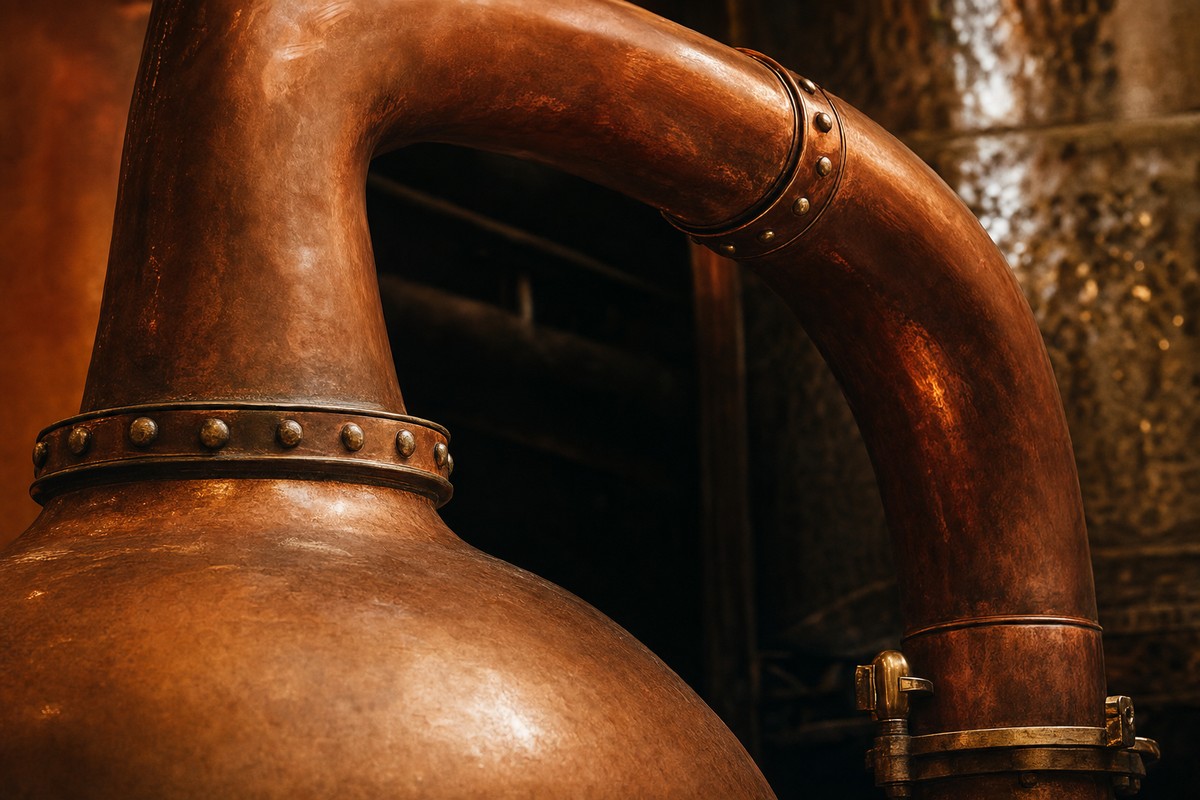
Distillation. The fermented “beer” is distilled, concentrating alcohol and carrying some — not all — of fermentation’s flavor compounds forward. Bourbon must come off the still at no more than 160 proof.
Barrel entry. The clear new-make whiskey enters a barrel at no more than 125 proof. This is one of the least-discussed decisions in the whole chain, and it’s real: water and ethanol extract differently from wood.
Maturation. In new, charred oak — a legal requirement, not just tradition — the whiskey spends years extracting color and flavor, losing volume to evaporation (the Angel’s Share), and changing based on exactly where in the warehouse the barrel sits.
Selection. Someone tastes individual barrels and decides which are ready, which need more time, and which don’t make the cut at all.
Blending or bottling. Most bourbon is a blend of many barrels toward a consistent house profile. Single Barrel releases skip this step on purpose.
Ledger Example
Four Roses makes the whole chain visible at once.
Flavor is a system. Understanding bourbon isn’t about finding the one variable responsible for what you’re tasting — it’s learning how the variables work together.
Four Roses runs two mash bills through five yeast strains to produce ten recipes, then blends or single-barrels them into three different final products — the clearest real-world demonstration on the shelf that grain, fermentation, barrel, selection and blending are each doing independent work.