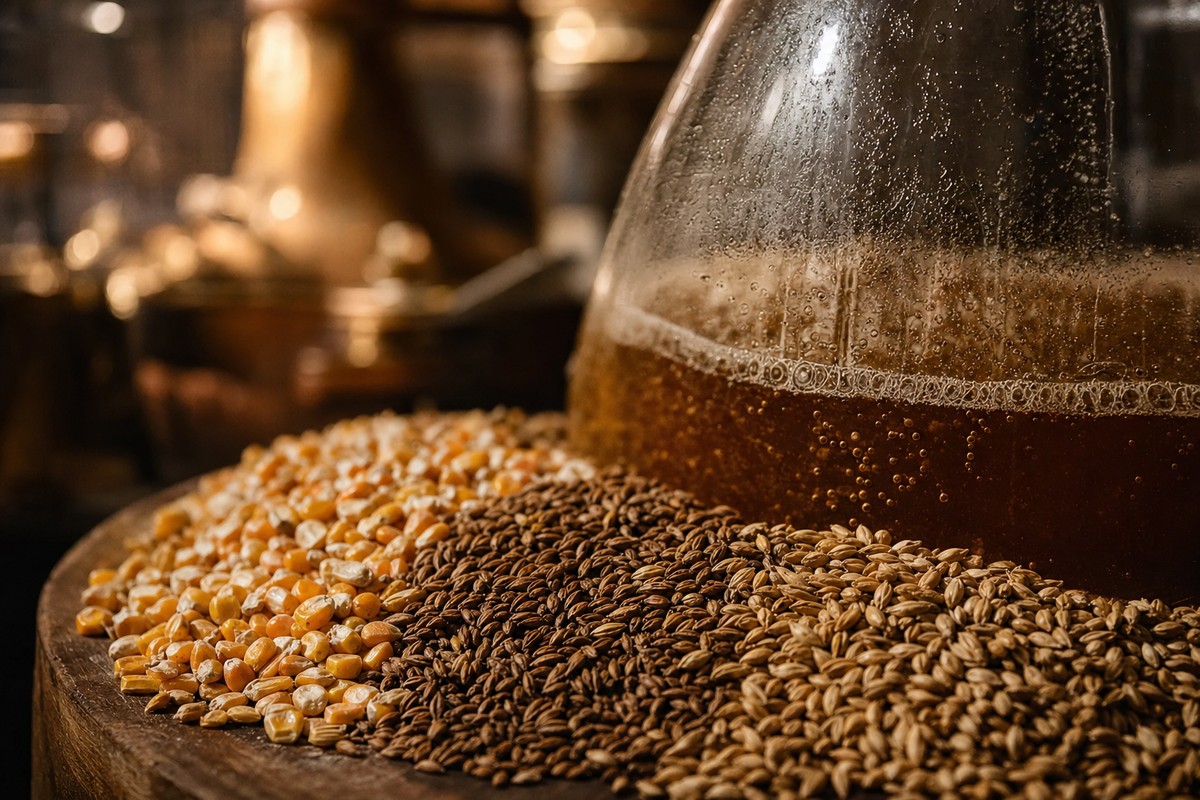
Rye is bourbon’s traditional counterweight to corn: where corn brings sweetness and body, rye brings spice, black pepper, herbal notes, a drier finish, and sometimes a bright, almost fruity lift depending on fermentation and yeast. The more rye in the mash bill, the more that character tends to assert itself — which is why “high-rye” has become a recognized bourbon style in its own right, not just a variation on a traditional recipe.
Ledger Example
Same secondary grain, very different proportion.
| Bottle | Corn | Rye | Malted Barley |
|---|---|---|---|
| Woodford Reserve (traditional) | 72% | 18% | 10% |
| Bardstown High Rye | 60% | 36% | 4% |
Woodford Reserve runs a traditional, comparatively low-rye recipe. Bardstown’s High Rye roughly doubles the rye share — and The Bourbon Ledger’s own tasting notes on that bottle describe apricot, orange blossom, mint, caramel, nutmeg, cinnamon and vanilla.
Why It Matters
Rye is also its own whiskey category.
Legally, a “rye whiskey” is a separate category from bourbon — it requires at least 51% rye in the mash bill, rye’s role in bourbon’s much smaller minority share. If you like what a high-rye bourbon is doing, straight rye whiskey is the logical next bottle to try; it’s the same grain pushed all the way to the foreground instead of playing counterweight to corn.